Public media’s story didn’t start with Lyndon Johnson or the Public Broadcasting Act. In this conversation, historians Josh Shepperd and Allison Perlman, sociologist Laura Garbes, and Black Public Media Executive Director Leslie Fields-Cruz trace the roots of public media back more than a century, exploring how early innovators navigated new technologies, shifting audiences, and questions about who public media is meant to serve. It’s a history that has a lot to say about where we are now.
Innovate with Current: The Secret History of Public Media
February 20, 2025
Full Transcript
[Chad Davis] 13:01:37
All right. I think we will go ahead and get started. So those of you who are already on You’ve heard me say a little, but I will say thank you again for joining us. This is the second of two parts that we at Public Media Innovators have put together with Current.
[Chad Davis] 13:01:57
Our little innovate with Current series that we do occasionally. And the first part was all about kind of visions for the future of public media. And if you missed that in any way, we’ll put the link where you can find that video in the chat.
[Chad Davis] 13:02:14
We’ve got a lot of buzz afterwards about that too. So thank you, Amber. Who’s dropped that in. I do want to introduce my colleagues at PMI, Amber Samdahl at PBS Wisconsin and David Huppert at PBS North Carolina.
[Chad Davis] 13:02:28
And thanks to Nita, who kind of helps support us through this peer learning community and helps make these webinars possible. Thanks also to Current for loaning us Mike Jansen, who’s going to do all of the interviewing and hosting duties. So Mike, do you want to take it from here?
[Mike Janssen] 13:02:49
I sure will. So hi there. I’m Mike Jansen, digital editor with Current. And as Chad was saying, if you joined us for last month’s webinar, you know that we looked at the future of public media.
[Mike Janssen] 13:02:58
And this month we’re looking back, but we’re not just revisiting the past. We’re going to uncover lessons that we can use to help public media navigate its future.
[Mike Janssen] 13:03:08
As I spoke with our panelists to prepare for this discussion, I was reminded that the founders of public broadcasting were inspired by some fundamental ideas about the purpose of the system.
[Mike Janssen] 13:03:17
And the needs that they were aiming to address. And I think exploring those ideas is a great way to remind ourselves why the concept of public broadcasting It’s something worth fighting for today.
[Mike Janssen] 13:03:26
Especially at a time when it’s increasingly under attack. At the same time, we’ll examine how public media’s growth brought challenges and limitations that still shape the system today.
[Mike Janssen] 13:03:37
So let’s get started with some brief introductions of the panelists that you’ll hear from today.
[Mike Janssen] 13:03:41
Allison Perlman is Associate Professor of history and film and media studies at the University of California, Irvine.
[Mike Janssen] 13:03:47
She’s the author of Public Interests, Media Advocacy, and Struggles Over U.S. Television She’s currently working on a book about the history of national educational television.
[Mike Janssen] 13:03:57
Laura Garbus is a sociologist and assistant professor at the University of Minnesota Twin Cities Her research focuses broadly on racism, voice, and the cultural industries.
[Mike Janssen] 13:04:07
Her forthcoming book is called Listeners Like Who, Exclusion and Resistance in the Public Radio Industry.
[Mike Janssen] 13:04:14
Leslie Fields Cruz is the Executive Director of Black Public Media, the nation’s only nonprofit solely dedicated to the development of nonfiction Black content for distribution on public media.
[Mike Janssen] 13:04:25
She’s been with Black Public Media since 2001. And we’ll start our conversation with Josh Shepard.
[Mike Janssen] 13:04:32
Josh is an associate professor at the University of Colorado Boulder. He’s author of Shadow of the New Deal, The Victory of Public Broadcasting.
[Mike Janssen] 13:04:40
Which tells the story of how thousands of advocates built the bottom-up decentralized network that would eventually become public broadcasting.
[Mike Janssen] 13:04:47
Josh also assists with curating Rewind, a current series of essays about the roots of public media, and along with our panelist, Allison.
[Mike Janssen] 13:04:53
He’s working on an update to current’s book about the history of public broadcasting.
[Mike Janssen] 13:04:58
So Josh, let’s start with where did the mission of public, the mission statement of public broadcasting come from and how did it materialize in the Public Broadcasting Act of 1967?
[Josh Shepperd] 13:05:10
Okay, thank you. That’s a big question. Yeah. So where did they come from?
[Mike Janssen] 13:05:12
Yeah.
[Josh Shepperd] 13:05:13
So, you know, when you look at the history of public media, it really comes out of the beginning of what we would call compulsory education, which is that everyone needs to go to school and that there are like requirements around that. And so that includes the attendance, but it also includes like public service, and it includes facilities. And by facilities, I mean like you have to have a school to go to. There have to be books, there have to be rulers and all these types of things. But it couldn’t apply when the mandates were introduced on state by state levels to every person in the state. It was not actually immediately accessible
[Josh Shepperd] 13:05:52
To every possible person. And so what we’re talking about here is about the 1910s when it really begins to emerge there. And so they began to look at ways to reach different students who couldn’t actually meet state mandates or bureaucratic mandates for requiring to go to school. And so the broadcasting model, the one to many model, emerges around 1920. And it immediately seems to fit the beginning of what they called distance learning.
[Josh Shepperd] 13:06:23
Or correspondence classes would be another way to put it. And so they started putting just like professor and like local people who are experts on the radio and they would essentially just give like lectures about their topics of specialty. And it could have been something like history
[Josh Shepperd] 13:06:40
It could have been what they called home economics at the time, which later became cooking shows in the public media genres and these types of things. But the key was that they realized that the medium itself radio was useful beyond just mere classroom
[Josh Shepperd] 13:07:00
Access alone. And you begin to see something like a philosophy of inclusion and of access emerge in line with like a progressive era. So the immigration era of the 1880s to the early 1900s, they begin to like imprint a philosophy of necessity that everyone deserves an education, not to just have access to it because there’s some state mandate, but it is actually a kind of a right. And so you begin to see this idea that radio
[Josh Shepperd] 13:07:27
In the broadcasting in its very kind of early experimental form.
[Josh Shepperd] 13:07:31
It actually has a conceptual basis by which they could build an entire what we would now look at as a media industry around meeting and materializing a concept of equal access to education. So public media is fundamentally over 100 years old, and it begins with a mission statement that’s formulated really by the late 1920s that the goal of technology is not just to reach as many people for entertainment as possible, to spread information alone, but it actually is part of the democratic principles associated with access itself.
[Josh Shepperd] 13:08:10
And so like by the late 1920s, we have something pretty similar. I see Bill Simmerings here to what Bill Simmering would later really expertly articulate and still resonates, which is that the whole thinking about media itself for what becomes public media is different than the commercial media system. It’s something that actually is based in a mission statement. It’s based in an idealism and it’s based in necessities of democratic practice.
[Josh Shepperd] 13:08:38
And so once that begins to emerge and it really is consolidated by the 1930s, they being educational broadcasters of the time, realized that they also have to be better at broadcasting. And that’s like an old joke within public media is that it’s not educational broadcasting. And the truth is, is years of research in archives and Allison And Laura have also done this work, is that it was pretty terrible in the 1920s and 1930s. It didn’t have the aesthetics. It didn’t have the conversational tone. It didn’t have a reason for people to want to support it. And what you see is a lot of like regulatory defeats
[Josh Shepperd] 13:09:15
For its first 20 years in which it’s constantly being taken off the air because it’s not meeting what everyone here knows is important, which is like the technical and the static mandates by which audiences and regulators will want to see it actually work. And so really the first like 20 something years of what we would now call public media, which is the topic of my book.
[Josh Shepperd] 13:09:37
Is a kind of an activist campaign that the idea is just as important as the successful aesthetics of like NBC or CBS in the 1930s and 1940s and the vaudeville performers is that there’s a prescience to technology that goes beyond simply enjoying what people are hearing alone. And so what that required was what they would call like um you know special frequencies. They needed frequencies that were not in competition with commercial media, which kept showing that it was more entertaining and could reach more people and all these types of things. So by the 1950s, they began to install
[Josh Shepperd] 13:10:16
Policies based upon the successes of the activism, which I detail in the book.
[Josh Shepperd] 13:10:20
And especially about 1952 with the emergence of television so that educational media and the founding of NET is not something that is considered a type of commercial media that’s not as good aesthetically or is competing with commercial media for what they called frequency scarcity. So a lack of channels. So what happens is, and I can go through this quickly we can come back to it is but between 52 and 67, there’s actually multiple policies for which 67 is a culmination. And there’s like the National Defense of Education Act. There’s a bunch of education policies. And every policy that funds public media
[Josh Shepperd] 13:11:00
In the 50s and 60s, up to 67 is actually
[Josh Shepperd] 13:11:07
Questions about compulsory education and reaching every possible listener for educational purposes. And in 62, there’s something called the Educational Television Facilities Act. And it essentially is the Public Broadcasting Act. And the Public Broadcasting Act is the five-year renewal of the Educational Television Facilities Act and the entire act is built around building transmitters, which becomes one of the titles of the Public Broadcasting Act itself. So, okay, and I’ll stop on this in just a second, which is to say.
[Josh Shepperd] 13:11:39
The concept of equal access to education led to all of the funding through transmission and access points of facilities. And every winning argument for funding that has happened since the 1920s has been based not just in the concept, but the relationship between the concept and the access points, so the infrastructure. And that typically has been the winning argument for getting the money, even if the investments that attract everyone to the
[Josh Shepperd] 13:12:05
Importance of public media are actually very much based in concepts of democracy.
[Mike Janssen] 13:12:11
It’s interesting to see how things actually became a network. And one thing I wanted to ask you about was the bicycle network.
[Mike Janssen] 13:12:16
I mean, people may have heard that term, but it was an early innovation that helped distribute educational programming nationwide. How did it work and why was it like a really important game changer for the system?
[Josh Shepperd] 13:12:25
Yeah, so if we, I can answer this one quickly, which is if you go back and see how disorganized things were in the 20s and 30s and 40s with the experiments as they’re figuring out how to create a different genre and different approach to media than the commercial media broadcasters.
[Josh Shepperd] 13:12:41
What they found was that certain stations, especially Wisconsin, especially Ohio State.
[Josh Shepperd] 13:12:46
Especially Illinois, universities. We’re producing pretty high quality programming at that point. And so were some East Coast stations. So they began to just distribute examples of the best programs, especially to smaller stations that didn’t have the funding.
[Josh Shepperd] 13:13:01
And what that did was it actually consolidated the genres that we now associate with public media. And so almost every public media genre is actually a type of curriculum in its inception. Every single public media genre started as a class, essentially, that became educational entertainment of a type. And in a kind of like aesthetic emerged by which a combination of educational commitments and philosophical commitments, I would say, along with just doing good television radio, began to foment.
[Josh Shepperd] 13:13:33
And the bicycle network was distribution mechanism and it would usually start with University of Illinois or NYC, WNYC inside Segal. And then they would just send one program around the country as a record, like a pressed record, which they called a program transcription. And then what happened was we would kind of get an idea of what non-commercial media meant in contrast to the quiz shows or something like that, you know, or the Westerns that you would have gotten on CBS at the time. But the origins of the aesthetic of what we think of public media are in fact the bicycle network and the sharing of the best examples of curriculum
[Josh Shepperd] 13:14:11
Around the country at all the different universities. And that’s also why a lot of public media stations are at universities is they just literally began as university divisions.
[Mike Janssen] 13:14:21
All right. Well, thanks, Josh. We’ll come back to you later with some more questions, I’m sure.
[Mike Janssen] 13:14:25
Let’s move on to Allison Perlman, who’s going to bring us more into the middle of the 20th century and the development of the system.
[Mike Janssen] 13:14:32
As I said earlier, Allison is Associate Professor of history and film and media studies at the University of California, Irvine.
[Mike Janssen] 13:14:39
And Allison, in your book, Public Interests, Media Advocacy, and Struggles Over U.S. Television.
[Mike Janssen] 13:14:43
You tell the story of how advocates for educational TV persuaded the FCC to set aside frequencies for non-commercial TV stations, which was a major and important development.
[Mike Janssen] 13:14:53
What were some of the creative ways they envisioned using television to serve the public?
[Allison Perlman] 13:14:58
Yeah, thank you. Well, in some ways, it’s really great to follow Josh because the end of his story is kind of the beginning of mine.
[Allison Perlman] 13:15:06
And so in the early 1950s, there were two kind of really important seminars at the University of Illinois that brought together educational broadcasters from across the country.
[Allison Perlman] 13:15:17
And a number of developments came out of these seminars. One was the bicycle network that Josh just referred to. And then the other was this growing sense amongst educational broadcasters that TV was really important.
[Allison Perlman] 13:15:31
And that if there wasn’t some action right away to try to set aside channels for non-commercial educational purposes.
[Allison Perlman] 13:15:39
Then essentially the TV medium would be this kind of commercial wasteland with no possibility for educational programming. And so What they did is they went to the Ford Foundation, asked for some money.
[Allison Perlman] 13:15:56
Collaborated with the National Association of Educational Broadcasters and created a group to advocate with the Federal Communications Commission to set aside channels in every market in the country, specifically for non-commercial educational purposes.
[Allison Perlman] 13:16:13
Their request coincided and in fact was sort of inspired by a television licensing freeze between 1948 and 1952. So in these four-year period, the Federal Communications Commission did not issue any new television licenses predominantly because the FCC wanted to figure out answers to some technological questions like, you know, should we have UHF and VHF stations? How many stations can operate within a single market? And what’s so remarkable about these educational broadcasters is they introduced this new issue to the FCC deliberations, which is should the commission set aside channels specifically
[Allison Perlman] 13:16:52
For non-commercial educational purposes. One of the challenges that these advocates had was to persuade the FCC that if they actually set aside channels.
[Allison Perlman] 13:17:03
People would use them, you know, that there was like interest and enthusiasm to have a local channel in specific communities for educational purposes. And so the primary advocacy group, the Joint Committee on Educational Television.
[Allison Perlman] 13:17:18
Essentially sent people out across the country and asked local communities Would educational television benefit you? How would you imagine using it? What kinds of purposes could it serve?
[Allison Perlman] 13:17:31
And they got a really diverse range of answers. So some of the answers were very much in line with what Josh was talking about, which was instructional television. We could use TV to equalize access to a quality education across our school system.
[Allison Perlman] 13:17:46
Especially within school systems that were under-resourced. There were other communities that thought we would love to use educational television to distribute access to cultural programming. So anybody could get access to symphonies or opera or theater, and that would really benefit us.
[Allison Perlman] 13:18:05
There were some communities who thought we would love to use television as an instrument of civic instruction so that the governor or the mayor or local school boards could have a platform to talk to a diverse public.
[Allison Perlman] 13:18:18
And so this testimony became a really key part of persuading the Federal Communications Commission to set aside 242 channels specifically for noncommercial educational television.
[Allison Perlman] 13:18:30
And so in some ways, the roots of public television comes from this moment of sort of a setting aside of a public resource, the nation’s airwaves specifically for non-commercial TV.
[Mike Janssen] 13:18:46
So the book you’re currently working on is about the history of national educational television. And for members of our audience who may not know, what was NET and what was its significance during this time?
[Allison Perlman] 13:18:56
Yeah, so NET is often described as the precursor to PBS, and I think that’s probably a fairly good description.
[Allison Perlman] 13:19:04
So after the FCC set aside these reservations in 1952, there was a sense that the success or failure of educational television would hinge on the quality of its programming.
[Allison Perlman] 13:19:15
And so the Ford Foundation, which was the primary benefactor of non-commercial television.
[Allison Perlman] 13:19:22
For decades, essentially created a new organization called the Educational Television and Radio Center.
[Allison Perlman] 13:19:29
And its primary goal was to collect, later produce and distribute programming to this burgeoning educational television sector.
[Allison Perlman] 13:19:39
And so initially in the 1950s, NET was the brand or the logo that this nationally circulating programming was distributed under that was collected, later produced by the center.
[Allison Perlman] 13:19:53
In the 1950s, it looked so much like the radio that Josh was describing. The president of NET was a man named Harry Newbern, who had been the president of the University of Oregon And he approached delivering a national programming service, somewhat similarly to developing a college curriculum. So he created
[Allison Perlman] 13:20:12
Different categories of programs that he would distribute each week to educational television stations that aligned with academic subjects, so sciences, humanities, arts, and so on.
[Allison Perlman] 13:20:25
New Bern steps down in 1958 and he’s replaced by a man named John White. And White had a somewhat different vision of what NET should do for national circulating programming, where he inaugurated this idea of educational television as a fourth network. And so it was clearly educational in purpose and NET was always very aware that local stations
[Allison Perlman] 13:20:50
Really prioritize instructional programming for their local communities. But White really wanted NET to provide programming that offered things that you couldn’t get on commercial TV. So that would include discussion of controversial topics, the airing of perspectives or viewpoints that commercial stations were nervous to put on the air.
[Allison Perlman] 13:21:13
An embrace of experimental, sometimes avant-garde cultural programming that was like on the cutting edge, but maybe a little bit too weird for commercial stations.
[Allison Perlman] 13:21:22
And so NET up, you know, throughout the 1950s and 1960s was the primary national organization to set a national programming schedule for local stations.
[Mike Janssen] 13:21:33
One part of the history you research that I found really interesting was how NET’s innovative work in the 60s of producing documentaries and journalism for national broadcast ran into friction from stations that didn’t want to air that programming. What was behind those disagreements?
[Allison Perlman] 13:21:48
Yeah, so the educational television sector throughout the 50s and 60s and maybe still today was really diverse and had very distinct understandings of what the purpose of non-commercial television was. So there were some stations that were very wedded to the somewhat strict definition of education. Like our job is to get French lessons to kids who otherwise wouldn’t learn French. There were other stations that were supported by state governments that really understood the goal of the station as civic instruction, but in a way that shored up the status quo.
[Allison Perlman] 13:22:25
And there were also stations, especially located on the coasts that really embraced White’s vision of educational television as oppositional television or a form of television that was really important counterweight to commercial broadcasting.
[Allison Perlman] 13:22:44
And so one of the things that NET encounters, and I have a tremendous amount of compassion for a lot of these local stations.
[Allison Perlman] 13:22:51
Is they really wanted to push the boundaries of what could happen on television. So they would circulate programs the ones that I think probably were most there were controversial were often around African-American civil rights. So a number of stations uh
[Allison Perlman] 13:23:09
For political reasons, maybe also for the personal beliefs of some of the station managers.
[Allison Perlman] 13:23:14
We’re really reluctant to put programs on the air that discuss the Black freedom struggle in ways that were highly sympathetic to some of the activists.
[Allison Perlman] 13:23:25
Net also distributed programming on Cuba that was sympathetic to Fidel Castro. In the 1960s also did a lot of programming that was interested in this burgeoning conservative movement and all elements of the far right.
[Allison Perlman] 13:23:43
Some stations just flat out refuse to air programming that they thought would not be in the service of their local communities and or might disrupt the financing that they were receiving from local school systems, from state legislatures, or from public universities. And so by the time that the Public Broadcasting Act passes in 1967, there’s a healthy amount of friction
[Allison Perlman] 13:24:06
Between some stations and NET over the vision of what public television should be.
[Mike Janssen] 13:24:12
All right. Well, this idea of this idea conflict between the mission of public broadcasting and how to put it into practice is something that we’re going to talk about with Laura Garvis as well. Laura Garvis is a sociologist and assistant professor at the University of Minnesota Twin Cities.
[Mike Janssen] 13:24:26
Her forthcoming book, Listeners Like Who, Exclusion and Resistance in the Public Radio Industry.
[Mike Janssen] 13:24:31
Examines how public radio was formed as a white racialized institution And it shows the complex cultural work that public radio professionals of color have done to expand who the network is for.
[Mike Janssen] 13:24:42
It’s what I’ve been able to see of it so far is really fascinating. I think it’s something a lot of people in the system are going to want to read when it comes out pretty soon. So I’m looking forward to talking with Laura about this. So starting in the early 70s, we have the formation of NPR, and that’s a period of time that you’ve looked at
[Mike Janssen] 13:24:59
Quite a bit, Laura. Public Media was founded with a commitment to serving underserved audiences and providing a platform for diverse voices.
[Mike Janssen] 13:25:07
But your research shows that from the start, the system had trouble meeting that goal. How did the conditions around NPR’s creation limit its ability to truly serve all communities.
[Laura Garbes] 13:25:19
Yes, thank you for that question. And I’m really grateful to be following Josh and Allison, who really set the stage for Something I focus less on on the book, the first half of the 20th century. But as a sociologist
[Laura Garbes] 13:25:33
Of race when I’m looking at in my current project public radio’s development and thinking about the 60s and 70s.
[Laura Garbes] 13:25:40
I’m thinking about the fact that it’s like this current iteration that was enshrined in legislation was enshrined during the civil rights era.
[Laura Garbes] 13:25:50
But I need to make clear how large the color line moons across this history of the growth of educational media and public media’s infrastructure.
[Laura Garbes] 13:25:59
This is the case because BDO is segregated and all education is racially segregated in the first half of the 20th century.
[Laura Garbes] 13:26:08
So it’s a strange thing whereas it’s a time of great optimism, this late 60s and early 70s But infrastructurally, you have to think about the fact that the first half of the 20th century was a struggle towards civil rights that was lost post-right Reconstruction era
[Laura Garbes] 13:26:27
Black Americans and just dealing with the shadow of Jim Crow in the midst of all of these decisions being made about educational media.
[Laura Garbes] 13:26:36
Um during you know the 1910s to 1960s. So I just want to set that back ground to be able to kind of set my perspective on it so What this ends up doing is thinking about, I think about in my um
[Laura Garbes] 13:26:52
My book that like there was this great desire for pluralism And in a lot of ways, there was a lot of progressive things that public media did in its uh first 10 years. It was wonderfully experimental. It also really shifted
[Laura Garbes] 13:27:12
The dynamics of whose voices could be seen as voices of authority, thinking about the founding mothers right we know um um uh There was a recent book on the founding mothers and then uh by i believe Is it Linda or Lisa Napoli? Lisa Napoli.
[Mike Janssen] 13:27:31
It’s an appelle. Mm-hmm.
[Laura Garbes] 13:27:32
And so a lot of really good stuff happening in the first few years and also When I went into actually systematically look at the barriers that remained, it’s like barriers remained under the surface to really both serve minoritized publics and also
[Laura Garbes] 13:27:52
To promote the presence of people of color and women at the decision-making tables at those times. So early in the book, I kind of discuss how founders implemented certain membership criteria that from my view and sufficiently um included non-white community stations. It precluded a lot of non-white community stations
[Laura Garbes] 13:28:17
From participating because of this first half of the 20th century and this airwave segregation that was not really materially attended to enough, right? So station membership was predominantly through universities and also nonprofit community groups that had sufficient funding and sufficient resources
[Laura Garbes] 13:28:37
To get a station license and that was a majority white then membership.
[Laura Garbes] 13:28:44
And then when you’re thinking about sort of normative pressures, founders ultimately use the networks they have to hire talent to hire talent hire managers, hire all these folks. And this was really progressive in the sense that a lot of women were hired.
[Laura Garbes] 13:29:03
But there was not so much of a reaching across the color line given the segregation existence in the decades prior, right?
[Laura Garbes] 13:29:11
So those are just a few things and we can, I’ll leave it at that and then we’ll get to the next question.
[Mike Janssen] 13:29:18
All right. Well, one thing that you wanted to get across when we were speaking before this, that you want the audience to be able to take away is that In your view, innovation and diversity really go hand in hand in public media. And can you talk about what you’ve seen through your interviews and your research that bears out that connection?
[Laura Garbes] 13:29:37
Yes, absolutely. And I just want to also attend to the chat real quick. My book isn’t $120. It’s actually $25. You just got to click on the paperback. So thank you for that, Steve.
[Laura Garbes] 13:29:50
Hardcover is mostly used to buy from institutions, but paperback is for everyone.
[Laura Garbes] 13:29:55
Anyways, in terms of innovation, I really wanted to point out two things for the purposes of this webinar.
[Laura Garbes] 13:30:03
The first thing is that a lot of my interviews look at the more contemporary area and look at all of the innovations that folks of color that I interviewed, I interviewed 83 people.
[Laura Garbes] 13:30:17
Are doing in order to further expand who public radio is for and expand the amount of stories that are available on the airwaves.
[Laura Garbes] 13:30:26
And I think it’s… was really astounding to me to actually see different strategies that people enacted.
[Laura Garbes] 13:30:33
And furthermore, it made me really feel like, okay, innovation and diversity which I already knew in theory, but it really made me feel it in an embodied way. They go hand in hand in the sense that Conversely, when you are being innovative in the early years of public radio.
[Laura Garbes] 13:30:53
There’s this barrier by not having a diverse set of people in the room, either via class or via race, because I think about all of those folks and the way that their social positions could have been integrated into the programming and into the infrastructure from its very start.
[Laura Garbes] 13:31:14
And sort of only increase the innovation from there so That’s my take.
[Mike Janssen] 13:31:22
You told me that you think a truly innovative public media system would shift the way that we talk across social divisions in society. What would that look like?
[Laura Garbes] 13:31:29
Yeah. So, okay. So there’s also there’s this question that comes up about Okay, well, can we just serve different groups through podcasts and then one station for one person or one program for one person And I think that’s like an interesting take for thinking through how to make sure that there’s some sort of financial survival
[Laura Garbes] 13:31:54
But I worry about it from the perspective of the mission. And if we take it back to the mission and the idealism, it becomes a thing where in order for this to be a truly public media.
[Laura Garbes] 13:32:05
Their needs and for it to actually contribute to democracy, there has to be an insistence on talking across difference. And in order to do that, there has to be this sense that we have a broader public and not an audience and not a market to market different programs to, right?
[Laura Garbes] 13:32:26
So I always draw on Tanya Dreyer who talks about an ethics of listening and an ethics of care and listening. And I think through the way that public media needs to also develop further like this understanding that it should not be serving
[Laura Garbes] 13:32:47
One particular audience. And in theory, that is the case. And in mission, that is the case. However, in practice, given decades of governmental underfunding and also, as we know, the continued fight to like keep the federal funding that even exists, which is continually threatened
[Laura Garbes] 13:33:07
There becomes this sort of logic of trying to get a narrower set of people served Because they are the people that would be donating and they are the people that corporate underwriters would want to serve, if that makes sense. So we really need to think about this as a
[Laura Garbes] 13:33:27
Fight for not just resistant further commercialization or resisting further austerity but like the stakes at hand are are the mission of public broadcasting itself.
[Mike Janssen] 13:33:39
All right. Well, thank you. And we’re going to move on to speak with Leslie Cruz Fields. At Leslie Fields Cruz, I’m sorry, who will um have us look back at the founding of Black Public Media and even ahead to the future. So Leslie is the executive director of Black Public Media. She joined BPM in 2001 to manage its program development fund.
[Mike Janssen] 13:33:57
She served as director of programs from 2005 to 2008 and as VP of Programs and Operations from 2008 to 2014, Before being named BPM’s third executive director in 2014.
[Mike Janssen] 13:34:08
She’s the creator of BPM’s award-winning anthology series, Afropopop, The Ultimate Cultural Exchange, which features contemporary stories from the African diaspora.
[Mike Janssen] 13:34:16
And under her leadership, BPM has cultivated new partnerships, diversified revenues, and initiated vital new programs supporting Black talent and content development.
[Mike Janssen] 13:34:24
Leslie, how do the National Black Program Consortium get started and what need was it seeking to fill in the system at the time?
[Leslie Fields-Cruz] 13:34:32
So, hi, everyone. It’s really great to be here and to talk about and to learn more about the history of public media, some things I knew and some things I didn’t. So it’s always wonderful.
[Leslie Fields-Cruz] 13:34:42
But I know that back in 1977, there was a task force put together to really look at public media and how it’s serving underserved communities. At the time, I know that Vision Maker Media had already been created. And so they were serving the Native American communities. And so what came out of that report was that there was a focus on minorities being in control of
[Leslie Fields-Cruz] 13:35:09
Not just the stories, but even being able to distribute the content across the system. And so out of that in 1979, with some of the other producers at different public television stations around the country, they came together to form the National Black Programming Consortium. And so that’s really how we started to try to fill that need to bring content, to bring the stories that were being developed at different stations
[Leslie Fields-Cruz] 13:35:38
To other stations across the country.
[Mike Janssen] 13:35:41
You spoke with me about the mission of Black Public Media in a way that I think reinforces what our other panelists said about the system’s mission and the history of the mission, which is Public Media was created to do things that other media don’t do. And how does that perspective
[Leslie Fields-Cruz] 13:35:55
Mm-hmm.
[Mike Janssen] 13:35:56
Inform what BPM works on and what BPM supports.
[Leslie Fields-Cruz] 13:36:00
I mean, I think, you know, it’s funny because I was talking about this earlier with my colleague about what we do at Black Public Media. And comparing it to what the commercial media is putting out there in the world. And I think even going back in history.
[Leslie Fields-Cruz] 13:36:16
There was a need for certain types of stories about the African American and African diaspora experience to be available to the public. And so when you look at series like Eyes on the Prize, which was this incredibly deep dive into the civil rights era, the civil rights movement, right?
[Leslie Fields-Cruz] 13:36:32
Nothing like that had been done before, but it took Henry Hampton, who was a Black filmmaker who’s like, we need to have this story. So he created this, you know, it’s a two-part series. And I remember watching it as a teenager and learning so much more from
[Leslie Fields-Cruz] 13:36:49
That series that I had not received when I was in school. So that was another, you know, another Another instance of where MBPC at the time being able to help and support and push that series out in partnership with public media, serving an audience like myself at that age, discovering and seeing my own experience and
[Leslie Fields-Cruz] 13:37:14
Those of my parents at this point reflected in the media. So I think that our mission around bringing stories about the African-American and African diaspora experience supported and created by visionary content creatives is still, it was true then and it’s still true
[Leslie Fields-Cruz] 13:37:34
Today. And I also just want to make it clear to everyone because I get this, you know, some people say, oh, well.
[Leslie Fields-Cruz] 13:37:41
You’re only supporting Black filmmakers. And that’s actually not true. We’re really invested in supporting Black stories that illuminate and expand.
[Leslie Fields-Cruz] 13:37:51
The Black experience. Being African-American, even just being African-American, there is no one way to be black.
[Leslie Fields-Cruz] 13:37:58
And so the need for these stories and the diversity of these stories is important. And those stories aren’t necessarily going to resonate on commercial media, but they’re there for on public media and the public can access it.
[Mike Janssen] 13:38:14
Something you and I discussed beforehand ties into a point that I think Josh made in his book, which is that the new technologies are in some ways bringing public media closer to the service model that was envisioned in its earlier days.
[Mike Janssen] 13:38:26
And we discussed how you were at NBC at the time when the organization was still in BPC before it was Black Public Media. And you started leaning more into streaming and digital And why was that a move that that seemed like the right thing to do at the time.
[Leslie Fields-Cruz] 13:38:42
Well, on one hand, we were listening to the independent media makers. They were experimenting and trying to tell stories and distribute it on a platform that they felt was kind of like the wild, wild west you know there it was a way for them to reach audiences in a way that public media was
[Leslie Fields-Cruz] 13:39:01
Was not. They were, you know, public media was reaching a much older audience, a much wider audience.
[Leslie Fields-Cruz] 13:39:07
And they were trying to connect with younger and more diverse audiences. And so when we moved into the digital era, Jackie Jones was the executive director at that point in time. And what was interesting is Katrina had just happened and Jackie was like, well, you know, we could send some folks out to capture the story and create a documentary.
[Leslie Fields-Cruz] 13:39:28
Let’s figure out how do we do something that’s more where we can use, we can stream content and we can post articles all in, you know, on the website.
[Leslie Fields-Cruz] 13:39:38
And so I think it was called Katrina Stories. There’s so many other titles that we’ve done, was one of our first forays into online content. And then out of that, we created the New Media Institute because we wanted to educate The independent media makers, but also connect with any public media partners that wanted to
[Leslie Fields-Cruz] 13:40:00
Explore digital content creation. And then out of the New Media Institute, we creating a fund that was specifically for web series. And that’s where you find that we created Black Folk don’t by Angela Tucker. And for those of you who don’t know about Black Folk don’t, you can go to our website and watch the series.
[Leslie Fields-Cruz] 13:40:21
They were short pieces that sort of upended this notion of Black folk don’t swim. Yeah, yeah, that’s totally not true. But it’s funny, it’s tongue in cheek. And she’s able to explore these racial stereotypes in a way that can connect with younger audiences.
[Leslie Fields-Cruz] 13:40:38
And isn’t necessarily threatening, but definitely gets to the heart of the matter.
[Leslie Fields-Cruz] 13:40:43
And so we have been continuing to explore the changing landscape when it comes to the technology.
[Leslie Fields-Cruz] 13:40:52
You know, we feel like we had a real strong handle on supporting content for digital streaming. But then, you know, when we started to look at AI and VR, we saw that as another opportunity to explore ways to bring Black stories to the public. And so we launched our BPM Plus program in 2018. And through that, we’ve actually been able to connect
[Leslie Fields-Cruz] 13:41:19
Creative technologists to public media, for example, Tamro Shogalu, who worked with Frontline on the Unresolved project She created the interactive website and there was an installation that was created. She won an Emmy for that.
[Leslie Fields-Cruz] 13:41:36
That would not have happened had not black public media had the connection that was working with Tamara and we introduced her to Frontline.
[Leslie Fields-Cruz] 13:41:45
You know, those are some of the things that we were able to do at Black Public Media is to create a pipeline for the makers and bring them into the public media environment. And we continue to do that.
[Leslie Fields-Cruz] 13:41:57
With our BPM Plus and our more traditional documentary programs.
[Mike Janssen] 13:42:04
All right. Well, thank you, Leslie. And thanks to all of our panelists so far for these great insights.
[Mike Janssen] 13:42:09
Chat, are there questions that we can take on from the chat?
[Chad Davis] 13:42:12
Yeah, I’ve got a couple. So, um. Simon was very ambitious, I might say, and just they actually sent us this question yesterday so We never even thought anyone would do that. So if you ever register for one of these and want to
[Chad Davis] 13:42:26
Want to email us questions ahead of time. That’s cool. This question, and I don’t know who sent it because I didn’t get the email directly, says, when I started in public radio in 1980 there’s a context clue. One of the big concerns was whether or not government support would be stopped 45 years later.
[Chad Davis] 13:42:44
That same question is still being asked. Yeah, I guess that question actually kind of goes back to 1970s.
[Chad Davis] 13:42:52
70, 71. Anyway, how much was public broadcasting dependent upon government funding in its formative years?
[Chad Davis] 13:42:59
This question is for all the panelists. Embrace yourselves. And can the panel foresee a system that doesn’t use government dollars? And if so.
[Chad Davis] 13:43:07
Where with sufficient funding come from?
[Chad Davis] 13:43:13
Who wants to be brave enough to tackle that one to start off? And that might not be a fair one.
[Chad Davis] 13:43:18
For Leslie to answer given her role, but you can definitely kick it to the historians um and then Leslie, you can let us know if you want to or not.
[Allison Perlman] 13:43:27
Well, I’m happy to start. The Ford Foundation.
[Allison Perlman] 13:43:34
Was instrumental in the creation of public television and Josh’s work really speaks to how instrumental the Rockefeller Foundation was to the development of educational radio.
[Allison Perlman] 13:43:46
So the early development of public media owed tremendously to philanthropic foundations.
[Allison Perlman] 13:43:52
There had historically been forms of public support. Josh mentioned the Educational Television Facilities Act.
[Allison Perlman] 13:43:58
So there was public support, for example, for the construction or activation of stations.
[Allison Perlman] 13:44:05
Different government departments or agencies might sponsor a particular program on educational television that aligned with their mission. So Department of Education or the Atomic Energy Commission and so on.
[Allison Perlman] 13:44:18
But um by and large, the Ford Foundation was uh how educational television existed both nationally and locally. And I will say for NET, which is the group that I’m studying right now, as early as 1960, there was tremendous hesitation
[Allison Perlman] 13:44:38
The public, meaning federal support of educational television would neutralize its potential to be an alternative to commercial broadcasting.
[Allison Perlman] 13:44:48
There were folks in NET who saw the Carnegie Commission report, which became the blueprint for the Public Broadcasting Act.
[Allison Perlman] 13:44:56
And felt really nervous about how federal support would affect the capacity of non-commercial broadcasting to be an oppositional or alternative form of media.
[Allison Perlman] 13:45:14
And so historically like historically Up until really 1967, the entire enterprise essentially existed because of the generosity of philanthropic foundations. And then at the local level.
[Allison Perlman] 13:45:28
Media was often publicly funded, but funded by state legislatures, funded by a local school systems, funded by public universities. So there has often been public support, but federal support was not a key part of the history of the sector before 1967. So I’ll stop there.
[Josh Shepperd] 13:45:50
I’ve got a couple observations. Thank you, Allison. And I think so, what is it, about $525 or more million dollars per year or something like that. And it’s about 70% goes to television, about 30% radio. Is that still right? I’m going to ask everyone to make sure I get this right.
[Mike Janssen] 13:46:06
I think it’s 75, 25. Yeah.
[Josh Shepperd] 13:46:08
75, 25. And then it’s about 300 plus, sometimes up to 500 million for philanthropy in addition to that amount, not including state funds. And then the viewers like you, you know, the listeners, it’s like an a lot more money. It’s almost 50% of the yearly funding comes from the donations or something like that. So it’s kind of like a pastiche, as I’ve called it, of different ways of accumulating money that should just come from the government, in my opinion, it should just be given to the CPB and then distributed in block grants. And a lot of the limits and pressures that are exerted upon the stations themselves and
[Josh Shepperd] 13:46:47
Upon public media by politics have gotten in the way of the possibilities of reaching its goals, which Laura has talked about very expertly and decoratedly within the academy. For example, that’s one of the causes. But I also have like some strategic observations from looking at like 700,000 pages of notes over 10 years or something like that. And so when has public media been able to fund itself when it’s been under duress or how has it survived attacks from non-supporters, let’s just say, of public media within politics? And I kind of mentioned this before when I was talking about the history.
[Josh Shepperd] 13:47:24
But the winning argument from a regulatory perspective has always been in meeting service criteria That’s detailed in the titles of the act, such as providing news and public affairs programming, and then also compliance. So if you’re going to talk about the compliance
[Josh Shepperd] 13:47:43
Within a federal policy that leads to regulatory decisions, anytime the institution fails at its own mandate, it is required to try to remit new funds. And so, you know, Laura and Allison and I are humanists or social scientists to some extent. We work in ideals. We’re all like very idealistic and we’re all pals and stuff like this.
[Josh Shepperd] 13:48:06
But in terms of what I’ve seen historically, the argument about the meaning of public media has not been persuasive in a regulatory sense. And in fact, has led to defeats a number of times because commercial broadcasters will just say they’re doing the same thing but better. And then regulators believe them because they don’t know.
[Josh Shepperd] 13:48:24
Because of the educational and facilities infrastructure that was set over the first 50, 60 years.
[Josh Shepperd] 13:48:33
That is the precedent by which an advocacy can succeed at forcing the institution to fund what we believe to be idealistic goals for democratic media. So I would say like if there was going to be some kind of activism during the current moment without getting too specific that we’re all aware of.
[Josh Shepperd] 13:48:52
It has to be the ideal as applied to the mixture of the service criteria and compliance issues that are largely based in facilities in the titles of the Act. At that point, they have to change the policy They can’t actually say, they can’t dodge it on content. Like the FCC’s attacks currently that are coming from the whole FCC, just new FCC chair.
[Josh Shepperd] 13:49:16
Our chief, the chair that are coming are based upon like an idea from the same source. Like the right has figured this out, but public media needs to now advocate based upon the regulations themselves in order to support the content that we believe in.
[Chad Davis] 13:49:36
Laura, did you want to add anything?
[Laura Garbes] 13:49:39
I suppose that pretty much covered it. And I do just want to give one global and comparative zoom out, right? So I just want to remind everybody that when you’re looking at this on a global scale, the US government has never nearly come close to funding
[Laura Garbes] 13:49:59
American public media as much as any other who we would consider a peer nation, democratic peer nation of the global north and i think that it’s important to kind of have this zoomed out vision and to make sure that we’re thinking about this not just in the logic that we’re given from people that are threatening to take away more funding, but to just recall that it’s like in terms of our idealism, it’s like the idealism towards
[Laura Garbes] 13:50:28
Funding beyond which we’ve ever seen, which seems really difficult in this current in this current political climate, but I think it’s important to to keep it in mind, especially because there’s been several different moments of funding cuts that end up being adapted to because you need to adapt to them to survive.
[Laura Garbes] 13:50:57
But perhaps it’s a matter of surviving right now and also making a plan for five years from now of going on the offensive of full-throatedly articulating what a truly public media and a truly funded public media could be in terms of
[Laura Garbes] 13:51:14
Our democratic ideals.
[Chad Davis] 13:51:18
Leslie, did you want to weigh in on this one or go to the next question?
[Leslie Fields-Cruz] 13:51:21
I mean, I think for us, since we’re our own independent nonprofit, right, and we’ve received some support from the Corporation for Public Broadcasting, but I think it’s good to know for those of you, I think, in terms of nonprofits who receive federal funding, and many times it’s used to leverage
[Leslie Fields-Cruz] 13:51:43
And match right to bring in additional dollars. I know that’s true for black public media, but it’s also true for the makers that we support.
[Leslie Fields-Cruz] 13:51:53
In so many cases. When black public media is first funds in for a project, it literally opens doors to private philanthropy, high worth donors in a way that makers who by the time they come to us, they’ve already tried to get into those doors and they can’t.
[Leslie Fields-Cruz] 13:52:12
But when someone says, oh, you received funding from Black Public Media.
[Leslie Fields-Cruz] 13:52:16
Wow, then we really want to listen to you. So, you know, and earlier on in Black Public Communities history, I think the support from CPB was crucial in order to create the organization so that it can then go out and
[Leslie Fields-Cruz] 13:52:31
Do the work that’s necessary to bring in other dollars. So I guess that’s that’s That’s all I can say.
[Chad Davis] 13:52:39
Cool. So the next question that came in, this is from Amanda Upson, and this is for anybody who wants to answer it. We will, just for everybody else on the We will drift past the top of the hour if we’ve got a couple more questions left. We want to try to get to all of them. So, you know, hang in there if you can.
[Chad Davis] 13:52:57
Past the top of the hour. Too many of you know who want to answer? How is your scholarship or the work that your organization creates in the case of Leslie?
[Chad Davis] 13:53:06
Focused on reaching, serving, or addressing disability, ensuring authentic representation of disability on screen and or accessibility in production and distribution.
[Chad Davis] 13:53:15
Here’s a little extra context. Given the references to broad public diversity driving innovation and mission for serving all Americans and the fact that disability cuts across all demographics.
[Chad Davis] 13:53:26
25 plus percent of American adult population. How do you ensure disability is contemplated as a part of your work. Leslie, do you want to maybe tackle that from kind of the black public media perspective? Because I know you guys have thought about this.
[Leslie Fields-Cruz] 13:53:43
Absolutely. Well, I mean, you know. In all of our agreements and contracts, we definitely ensure any maker that comes to us and they want to create, they want to receive our funding, they have to make sure their programs are closed captioned and hearing described. So that’s one end.
[Leslie Fields-Cruz] 13:54:04
From ensuring that there are makers behind the scenes that are representative of the disability community. Again, it’s where our funding is open to any and all of our makers. And I’m not going to you know, oh, I have a friend, but we have definitely funded makers who are telling those stories. And if you go to our Afropop digital shorts, there’s a piece right now
[Leslie Fields-Cruz] 13:54:31
It’s called hands performance and it’s actually um it’s fascinating because it’s in sign But if you don’t sign.
[Leslie Fields-Cruz] 13:54:40
You don’t know what’s saying. And that was the intention of the maker. It’s also uh represents black queer deaf community. So pulling in all of these multiple identities. So that is part of the work that we do at Black Public Community is to identify and source these films to bring them
[Leslie Fields-Cruz] 13:54:58
To the public. And that’s really part of our mandate.
[Leslie Fields-Cruz] 13:55:04
And that’s what we’ll continue to do.
[Chad Davis] 13:55:06
Absolutely. For the sort of for Allison and Josh and Laura, is there anybody out there who’s kind of doing that type of research, studying the history of of representation for people with disabilities on in in public media or in media in general?
[Chad Davis] 13:55:25
Reference sources we maybe want to consider. You guys know how many?
[Josh Shepperd] 13:55:30
So I’ve had the pleasure to meet with Amanda in Denver, who’s in Denver, and it’s a pretty impressive and important incubation project that Amanda’s overseeing right now with public media. And I think there’s room For research in this amongst the network of academics, and we’ve talked about this in a preliminarily
[Josh Shepperd] 13:55:48
Preliminary way, but I think there’s actually maybe a horizon here that could be opened up
[Laura Garbes] 13:56:01
I agree. And I just put Mara Mill’s work in the chat as somebody who does work in this area, that might be a good start theoretically.
[Laura Garbes] 13:56:12
But again, in my work, unfortunately, I’ve only addressed it insofar as I’m thinking about creators and creators of color and how that intersects with ability and disability.
[Laura Garbes] 13:56:27
So that’s one thing that I need to be attuning more intersectionally to in my work and my qualitative interviews. But it’s also something that the field itself there’s an open horizon, as Joshua put it.
[Allison Perlman] 13:56:40
Yeah, and I’ll just note, this is not specific to public media, but there was an excellent edited collection published a couple of years ago by Bill Kirkpatrick and Elizabeth L. Seltzer called Disability Media Studies.
[Allison Perlman] 13:56:53
That would be just a great place to start to see the best scholarship happening about this particular topic.
[Chad Davis] 13:57:02
Great. Thanks for that. So next question, Kevin Culligan College. Probably not pronouncing your name correctly, and I apologize for that. This is for anybody. Kevin would be curious to hear how you think the lessons from the past can be applied to challenges that
[Chad Davis] 13:57:18
Public media faces today. And I’ll just kind of enhance that a little bit by saying we’re all on this call kind of thinking about innovation and kind of what inspirations can we draw, you know, based on the histories that you guys have poured through.
[Chad Davis] 13:57:34
Anybody can start.
[Laura Garbes] 13:57:39
When I asked folks, so I interviewed 83 public radio professionals of color I always like to ask, you know.
[Laura Garbes] 13:57:48
Two things at the end. One is like, what are you most proud of making And if you could be wave a magic wand tomorrow with public media, what would you do right so On the point of what’s the thing you’re most proud of making, it is always something that pushes beyond the walls of the risk aversion that sometimes gets sedimented
[Laura Garbes] 13:58:15
In organizations. And I think it’s really telling that that came up in a sort of patterned way. And now to speak to the main question, the thinking of innovation and lessons from the past, the first five years of programming at National Public Radio, at least was boldly experimental and you know that that had a lot of reasons for it as it was finding its footing and finding its voice. But I think that folks look back to that as
[Laura Garbes] 13:58:42
If only if only there were room for both, right? There’s like, okay, we’ve gotten professionalized. People are listening now. We’ve gotten a secure voice And also, you know, kind of hearkening back to that era of experimentation Now that we have more folks of color than ever in the industry, I think that would be a really exciting
[Laura Garbes] 13:59:04
An exciting prospect. So I’ll leave it at that.
[Chad Davis] 13:59:11
Allison, you kind of referenced this a little bit in your section because you were talking about how in the 50s This, you know, what like media PBS was where um we didn’t where content that didn’t fit in other places in the mainstream before it was mainstream um
[Chad Davis] 13:59:32
Can you talk a little bit more about that in this context?
[Allison Perlman] 13:59:35
Sure. I mean, and sort of in response to the question, I mean, one of the lessons I take away is Public media is a miracle in the US context, and it like owes to the amazing people who for decades
[Allison Perlman] 13:59:50
We’re committed to non-commercial media as crucial for democratic self-governance and so When I look at when I look at how little money has always defined the sector. I feel like if there’s a through line across the history of public media in the US is starved for resources and yet people still like doing the work because they think it’s really important. And so that is
[Allison Perlman] 14:00:14
It’s really inspiring to me. I know that everyone right now, we feel like we’re there’s this like cycle of crisis that also defines public media. There’s always like a seeming existential threat around the corner. And I know that we’re in this moment right now, but it’s also persisted and that’s incredibly
[Allison Perlman] 14:00:35
Inspiring to me and it builds on generations of people doing the work as well.
[Allison Perlman] 14:00:41
I guess, you know, Chad, to your question. I am part of why I study NET and part of why NET is important to me, it sort of touches on what Laura had said.
[Allison Perlman] 14:00:54
Is that you For the history that I’m writing, the Public Broadcasting Act is not a beginning, it’s an ending.
[Allison Perlman] 14:01:00
To some degree. It starts a new chapter in the history of public media But it also kind of ends a chapter that was just kind of getting going with NET by the mid to late 1960s.
[Allison Perlman] 14:01:13
Where it Public media became a place For… the dissemination of viewpoints and perspectives that were just being ignored by commercial television.
[Allison Perlman] 14:01:26
Part of the work I’m doing is demonstrating that the Public Broadcasting Act, while bringing new funds to the sector, also politically neutralized its potential, at least in the immediate short term.
[Allison Perlman] 14:01:40
I don’t know. I have no idea if there’s a way to recover that spirit of thinking about public media as a space to create content that could never survive the commercial logics of other sources of media.
[Allison Perlman] 14:01:56
It’s really exciting to see that there was a moment when it was really doing it. And much of that programming is available on the American Archive for Public Broadcasting.
[Allison Perlman] 14:02:08
It’s great. It’s great.
[Chad Davis] 14:02:12
Cool, Chuck. Yeah.
[Josh Shepperd] 14:02:12
On Allison’s point, like, so the way I think about public media is it was a 40 year activism that mostly failed for educational media to become public media.
[Josh Shepperd] 14:02:24
And to become federal policy. So the history is the history a concept that engendered a media industry. It wasn’t a media industry that worked from a concept and then created programming. And so what’s so unique about US public media compared to other nation state contexts was that people didn’t actually have a lot to personally gain
[Josh Shepperd] 14:02:47
By building a system. They did it because they believed in equal access to education principle. And I feel like that educational angle is the sustainable argument for public media as it’s under attack, because education is also under attack now too, of course, as we’re saying but the um
[Josh Shepperd] 14:03:05
The idea that it’s a competitor or if someone has an idea that it’s a competitor with cable or other kinds of broadcasting or legacy media.
[Josh Shepperd] 14:03:15
Is actually, I think, a losing argument because there’s no reason for public media to exist unless it has its mission statement First, it is a mission statement based institution and it’s unique in that way And it was so powerful for so long of a concept
[Josh Shepperd] 14:03:32
That um it literally changed public policy and people just stuck with it. Like thousands of people stuck with it for decades and decades until it became true.
[Josh Shepperd] 14:03:41
And so I think like as it weathers another storm that the strategies of building infrastructure around the concept and around education And around those kinds of relationships will be what sustains it going forward.
[Chad Davis] 14:03:57
Great. Next question is from Steve Robinson. And I’m going to angle this one towards Laura and Leslie, just in the interest of time.
[Chad Davis] 14:04:06
In the 1970s, CPP issued a report that minorities about minorities in public broadcasting subtitled Asleep at the Switch.
[Chad Davis] 14:04:14
A week or two ago, that is 50 years later, current published report saying that the boards of public broadcasting stations don’t reflect the communities they serve. I’m sure Julie will stick that in the chat, a link to that.
[Chad Davis] 14:04:27
In just a moment. So a half century has gone by since CPP’s report.
[Chad Davis] 14:04:34
Do you think things are going to change in the next 50 years? Optimism, pessimism?
[Chad Davis] 14:04:38
Lawyer, you want to take that one first
[Laura Garbes] 14:04:42
I think they could if we’re, you know, I think it’s possible.
[Laura Garbes] 14:04:47
I think right now with the funding structure we have, we are what I argue a privilege dependent system, right? And what I mean by privilege dependence is if it’s this pastiche, as Josh calls it of trying to get the funding needed for all of these stations to do the excellent work they do.
[Laura Garbes] 14:05:07
Necessarily there will need to be a catering to a particular donor class, right? And there will be a need to cater to corporate underwriters of like look at what a wealthy audience we have, right? And there will be a need for those boards and a needs for the leadership
[Laura Garbes] 14:05:26
To be really good at asking philanthropists and asking well-connected, mostly white networks for money.
[Laura Garbes] 14:05:34
So I would say I’d be hard pressed to imagine a world that the funding structure stays exactly the same.
[Laura Garbes] 14:05:41
And things change. I think that the funding is sort of materially the key to all of this.
[Laura Garbes] 14:05:48
That said, I do think that there might be a world where there is a more ethnically and racially diverse group But it would still be a wealthier group. So I’ll say that.
[Laura Garbes] 14:06:03
Okay.
[Leslie Fields-Cruz] 14:06:05
I mean, I mean. I read that article briefly. I thought it was really interesting. And I’m a huge fan of Nine Network and Amy Shaw.
[Leslie Fields-Cruz] 14:06:17
And from what I understood and how she described how they uh made you know work to diversify their board, I think, and this is for In nonprofits in general, because we’re out there, there is the hunt, there is the hustle to try to find
[Leslie Fields-Cruz] 14:06:34
You know those corporate dollars or those philanthropic dollars and finding people that are well connected. But if you really look at your organization.
[Leslie Fields-Cruz] 14:06:42
And you try to, you know, you look at the programming as well, there’s so much more to the board than just that funding part. And that’s really where you’ll be able to lean into the diversity. However, you can also find a lot of rich people of color out there who have been
[Leslie Fields-Cruz] 14:07:00
Who would be willing to serve on the boards and do that work. But if we’re really talking about diversifying the boards, it can’t just be around the money structure, you have to look at it from the needs and the services and your constituency and bringing those voices in and empowering them on the board. So if there’s a model
[Leslie Fields-Cruz] 14:07:21
To be copied. It’s what Amy Shaw is doing over there at Nine Network.
[Leslie Fields-Cruz] 14:07:26
And I think that that rings true for not just public media boards, but corporate boards, nonprofit boards around the country.
[Chad Davis] 14:07:37
Thanks, Leslie. We’ve got two more questions, I think. I just want to do a quick plug because we are starting to drop off in terms of people for marches.
[Chad Davis] 14:07:46
Webinar. Hopefully I have gotten the right description here. I’ll drop it into the chat. And if not, Amber will uh Amber, we’ll
[Chad Davis] 14:07:57
And there’s the link, Amber, as I predicted would be right on it. So please register. But March is when we go to South by Southwest and March is when we try to bring back the lessons that are learned from South by Southwest. And in this instance.
[Chad Davis] 14:08:10
We’re going to be focusing on education and sort of the lessons learned that come out of South by Southwest EDU, which is a distinct conference of its own. So South by is all split into four. It’s interactive. It’s music and TV or film, which we all kind of know. But then there’s a whole
[Chad Davis] 14:08:27
Track that’s three or four days devoted to education. And those who are in education i think know about this but David is going to be producing a session where we actually kind of pull the learnings and the threads that we think are most applicable to public media and bring them to you on March 20th at 1 p.m. Eastern.
[Chad Davis] 14:08:45
10 a.m. Central. Okay. Quick plug there. Please register. Next question. Dan Sokolov.
[Chad Davis] 14:08:52
I don’t know if I’ve ever said your name. I know Dan a little bit, but if I got that wrong, I apologize. Given the current social and political climate and debate about the perceived bias of public media in Washington.
[Chad Davis] 14:09:04
And I’ll just sidebar to say for as long as I’ve worked in public media, we’ve gotten hit from the right and left telling us how biased we were. So I always feel like, oh.
[Chad Davis] 14:09:11
We’re right there in the middle. But that aside, proceed by some public media.
[Chad Davis] 14:09:18
Washington and likely across many states and communities what lessons from history should public media leaders like all of us, embrace to inform the conversation of why now more than ever, public media is a treasure not to be undermined.
[Chad Davis] 14:09:35
You may want to I’m seeing good facial reactions. Laura, you want?
[Chad Davis] 14:09:41
Yours looks the most eager. Yeah.
[Laura Garbes] 14:09:42
I’ll just say quickly. Okay, I just want to say quickly and I’ll leave it at that is like, I think an important talking point that I want to get into this conversation of like.
[Laura Garbes] 14:09:52
Oh, viewpoint diversity and right and left and things like that. I don’t think it’s necessarily, I think there’s another way to counter these questions in terms of thinking about it as a okay, public media was invested in to serve underrepresented communities. So it doesn’t really need to be this
[Laura Garbes] 14:10:23
Both sides conversation of this particular type of balance because it was it was created with something else in mind, something larger and something to cross across social divides. And I think when we continue to think about it as left political right political and centrist, I think we always get we kind of get trapped in this cycle of thinking of
[Laura Garbes] 14:10:47
Tit for tat, Democrat, Republican, when I think the mission is broader and it’s about cutting across that social division and cutting across difference.
[Josh Shepperd] 14:11:02
So I think it’s a common political strategy to frame something as being extreme that in fact isn’t, and it moves the goalposts. It’s bullshit.
[Josh Shepperd] 14:11:11
You know, I think. So I think it’s successfully changing the debate so that common journalistic practices received by a broader public who doesn’t understand how mass communications research work or journalistic questioning works.
[Josh Shepperd] 14:11:27
It seems like an opinion when in fact it’s a very difficult nuanced procedure, as everyone here knows. And so I think like there has to be public media has to push back a little bit saying, here are the standards that we’re pursuing. And it’s like kind of a reflexive moment to do an interview or something like that.
[Josh Shepperd] 14:11:44
And I think that that debate has been lost so far. I think public media has conceded to the right, the goalposts, which is moving it to the right.
[Josh Shepperd] 14:11:53
So I think that they’re there and the DEI stuff, I mean, like this is fundamental to the mission of public media or it should not exist. The DEI division must exist to address its core goals of public media. And this is also true for the way that it just facilitates discussions too. So I think the question is, can the agency whether or the agencies that are connected, can they weather the attacks with some reality when these are actually just very simple like propaganda kind of frameworks that are being applied and then being both sided in some cases? It’s not a both cider issue.
[Josh Shepperd] 14:12:29
They know that they’re
[Allison Perlman] 14:12:34
Yeah, I’ll just add, I mean. Conservative attack on public media predates the public broadcasting Act. It’s been with the sector for a really long time.
[Allison Perlman] 14:12:44
One of the things that’s also notable about it is often the politicians making the critiques have actually not viewed the programming that they are labeling as radical or crazy or whatnot. That sort of, as Josh and Laura are suggesting, it’s a really powerful frame and it’s a powerful political tool that doesn’t necessarily have anything to do with the actual programming being distributed by public media.
[Allison Perlman] 14:13:10
And I guess the one thing I would note is that the retreat to political timidity does not ward off the critique.
[Allison Perlman] 14:13:18
So you can change programming as much as you want. And Republicans who want to attack public media are still going to attack it. And so I really like the second part of the question, which is how do we make the case for it? And I think that’s the more important question. The critique matters because it can influence public perception. It can influence discussions over funding. But the critique, I think.
[Allison Perlman] 14:13:43
Baked into the culture wars that have defined US society for like 70 years. The bigger um goal is to figure out how to make the affirmative case that public media really matters and just know that there’s no way there’s nothing that I think public media can do to ward off the critique.
[Allison Perlman] 14:14:03
To just live with it and, you know, and make the case for why you matter.
[Chad Davis] 14:14:09
Leslie, anything to add or we’ll go to our last question?
[Leslie Fields-Cruz] 14:14:13
Um I mean… the fact that the No, I’m just saying, you know, it was it was the brilliance of public media to support the NMCA.
[Chad Davis] 14:14:17
Yeah, no, no. Put you on this.
[Leslie Fields-Cruz] 14:14:28
These organizations, we’ve existed long before DEI came you know that word or those acronyms came together. And so now we can talk more about how public media has
[Leslie Fields-Cruz] 14:14:47
Made good use of the NMCA. I think that there were some things that they’ve missed the boat on that we were there trying to say this is what you could do to serve the community. This is how you can help diversify.
[Leslie Fields-Cruz] 14:14:59
But the fact of the matter is. Public media was there long before commercial or anybody else was. And that is really, really important. And I said, you know, when everybody was writing DEI statements.
[Leslie Fields-Cruz] 14:15:11
I wrote in a blog, I said, I’ll be checking on you in five years.
[Leslie Fields-Cruz] 14:15:15
To see if those statements stand. A statement means nothing.
[Leslie Fields-Cruz] 14:15:20
It’s the action. It is the action. And if we are true to the public media mission.
[Leslie Fields-Cruz] 14:15:26
And now it’s very, very clear what our actions need to be.
[Chad Davis] 14:15:31
Good point. And Allison, thank you for just reminding us that you know the We tend to think of this as, well, oh, what happened in 95 or what happened with Nixon? But in fact, that this is this is something that has been with us as long as there has been in us.
[Chad Davis] 14:15:47
And that also underscores that us also predates PBS and NPR. You know, this has always been a pushback. There’s always the larger context of politics around public media. So I appreciate that reminder. Okay. Last question. And we’ve been trying to end on a on an
[Chad Davis] 14:16:04
Well, we’ll end on a future looking note. And what I kind of want to do, last month, of course, we talked about the vision or people who have a particular vision for the future of public media. And so what I’d like to do, having kind of dwelled on the history for now about 75 minutes, is to just ask each of you like.
[Chad Davis] 14:16:24
What is your vision or feel free to interpret that as a hope? What is your hope or vision for where public media goes, you know, it’s 2025 you know over the next 10 years, we’ll keep it. We’ll keep it lean.
[Chad Davis] 14:16:38
Does anybody want to volunteer to volunteer kick that one off.
[Chad Davis] 14:16:45
I may pick Josh just because I know Josh. But I also know Josh can vamp. So go Josh, go.
[Josh Shepperd] 14:16:50
What do I think? Yeah, what do I think? I think it survives the dangers of being occupied and then actually changing its mission statement. I think that’s the danger. That’s the goal. The goal is… on the next four years and possibly beyond if we don’t have fair elections for a while.
[Josh Shepperd] 14:17:12
This is not an institution that they’re going to completely defund. They’re going to try to change it into what we would call state-based media as opposed to public media where there’s no differentiation between what comes from a specific political party and the institution. Now, I don’t think that’s what public media wants. I think that’s the goal of the politics around it. So I think like the first thing that needs to be done is the infrastructural attendance, which is like you have to use the policies to protect it within the language of the policies that would then have to be changed in order to change the institution. And then from there, I think, you know, then the other stuff’s always like we call convergence in the academy, which is like all these different media are like changing to different media. It remediates.
[Josh Shepperd] 14:17:57
So you have like legacy media becoming digital media and stuff like that. That’s going to continue. I think that we’re looking at more streaming. You have that deal with Amazon for PBS stations.
[Josh Shepperd] 14:18:07
And then I think content, and I think this is the crucial thing. One thing I love about podcasting, there’s a lot of things I love about it, is that you can produce a podcast for the smallest imaginable audience that reaches the demographic, as we would call it, you know, intended, which is actually the goal of public media. There are opportunities through new technologies to meet its mandate that no audience is too small, that every constituency deserves access points. And if it continues to attend to that.
[Josh Shepperd] 14:18:33
That is actually the grounds by which it will grow and it has to be like a conglomeration of attending to the actual listeners of each community. I think Current just published something is only like 15% of boards resemble the actual communities or something like that. That was just like two or three days ago. And so, you know, the actual communities can be reached through localism and through these new digital strategies. So the attendance to localism, the attendance to producing and incubating, as Amanda’s doing with her work with disability and stuff
[Josh Shepperd] 14:19:04
That we talked about. And I think that That’s what sustains it. So, okay, I could probably keep going. I’m going to stop there.
[Chad Davis] 14:19:13
So I called on you first. I’m inclined to just go through the way we started. So Allison, would you be good to go next?
[Allison Perlman] 14:19:20
It’s a really great question. And I think I agree with a lot of what Josh said. And so I’ll say like my personal interest has often been in the national, you know, I’m interested in ET, I’m interested in national policy and so on.
[Allison Perlman] 14:19:33
But I actually think the future of public media are the most urgent future of public media as I see it.
[Allison Perlman] 14:19:38
Is actually an emphasis on the local. So as everyone probably understands, local journalism has plummeted, right? The economic model has just fallen through the floor and local communities desperately need solid reporting in journalism.
[Allison Perlman] 14:19:56
And public media can really be an instrument for that. And that would in some ways be my hope for the future of public media is to really embrace the localism that’s always been central to the development of the sector
[Allison Perlman] 14:20:12
And to be very much embedded in local communities and to provide the really crucial investigative reporting that we all need to live in a healthy society.
[Chad Davis] 14:20:24
Laura?
[Laura Garbes] 14:20:26
I agree with all that’s been said. I’ll just add, just kind of have been inspired by the prehistories of public media that were presented here or, you know, the history before my current iteration that I’m researching to think through like how we
[Laura Garbes] 14:20:44
Become those media activists again, I suppose. And how we think through this as like something that’s worth fighting for and getting into the political conversation outside of that cycle of the defund crisis, protect.
[Laura Garbes] 14:20:59
Oh, stave off another year, you know, like getting real lessons from those
[Chad Davis] 14:21:05
Cool. And Leslie, I saved you for last because I continue to be in awe of just what black public media does with emerging media and Full disclosure, while it’s not something I directly work with, we do in Nebraska a lot of partnerships with our emerging
[Chad Davis] 14:21:18
Media arts program and Leslie’s organization has artists in residence that train there. And it’s just a real forward lean into technology. And I figure none of you are going to be surprised if I don’t get out of this webinar with at least some looking forward at tech. But can you just
[Chad Davis] 14:21:37
Kind of infuse a little emerging media into your answer.
[Leslie Fields-Cruz] 14:21:43
Yeah, absolutely. I mean, I agree with everyone else on the panel, but also experiment, right? Us going and leaning into VR and AR, AI. And I, you know, I don’t know all the acronyms i just know that That’s where young new audiences are. That’s where they’re experimenting. And if we want to ensure that the stories that are coming across these platforms are representative
[Leslie Fields-Cruz] 14:22:10
Of the American which we all live in, then Black Public Media needs to be there.
[Leslie Fields-Cruz] 14:22:14
And we need to find a way to support the makers who want to create content. And we have to figure out how do we partner with the stations, but also the museums, the cultural centers, the libraries out there because that content can go into those communities. And I think it’s untapped.
[Leslie Fields-Cruz] 14:22:34
It’s really on top. And there might not necessarily be a strong monetary return on it, but there’s definitely an opportunity for education using those platforms. So lean into that and experiment. Take more risks. That’s part of the history of public media. And I think we need to lean into the risk taking aspects of
[Leslie Fields-Cruz] 14:22:54
Of what we do.
[Chad Davis] 14:22:55
Great point. Thank you for saying that. Thank you, Laura, Alice, and Josh, for just doing this type of research i mean hopefully one of the things that surprised you all What surprised me was that there are people out there who are researching us and studying us. And this is the academic interest. It’s a different way of saying we matter, but it was a real pleasure.
[Chad Davis] 14:23:17
I wasn’t a surprise for me as I was sort of beginning to think about how we put together this webinar. Thanks to Mike.
[Chad Davis] 14:23:23
For doing an awesome job hosting. And thanks to y’all for hanging around. Like we kept to half the attendance all the way to the end. We’re almost 90 minutes in. So join us next month, March 20th, 1 p.m. You can register.
[Mike Janssen] 14:23:25
You’re welcome.
[Chad Davis] 14:23:38
If you’re going to be at South by Southwest, email me like would love to connect Amber, David, and I are going to be there. Mikey from PBS is going to be there. So everyone have a safe month. Keep fighting the good fight.
[Mike Janssen] 14:23:48
Chad, can I make one plug before we go? On the forward-looking theme, yeah, on the forward-looking theme.
[Chad Davis] 14:23:49
Yep. Mike? Please plug away.
[Chad Davis] 14:23:54
Yeah.
[Mike Janssen] 14:23:55
Curran’s Rising Stars program is open for nominations. We’re looking for nominations of impressive talents under the age of 35 at your organizations.
[Mike Janssen] 14:24:03
We want nominations from organizations of all sizes, and the deadline is next Friday, February 28th. You can find out more at current.org slash risingstars 2025.
[Chad Davis] 14:24:13
That is on my to-do list for this week, Mike, just so you know. Good plug. All right, everybody be safe. And like I said, fight the good fight and we’ll see you next month.
[Mike Janssen] 14:24:15
All right.
[Mike Janssen] 14:24:20
Thanks, everyone.
[Chad Davis] 14:24:29
All right. You got to bounce, bounce. Thanks, Josh. See you when we all get back
Panelists
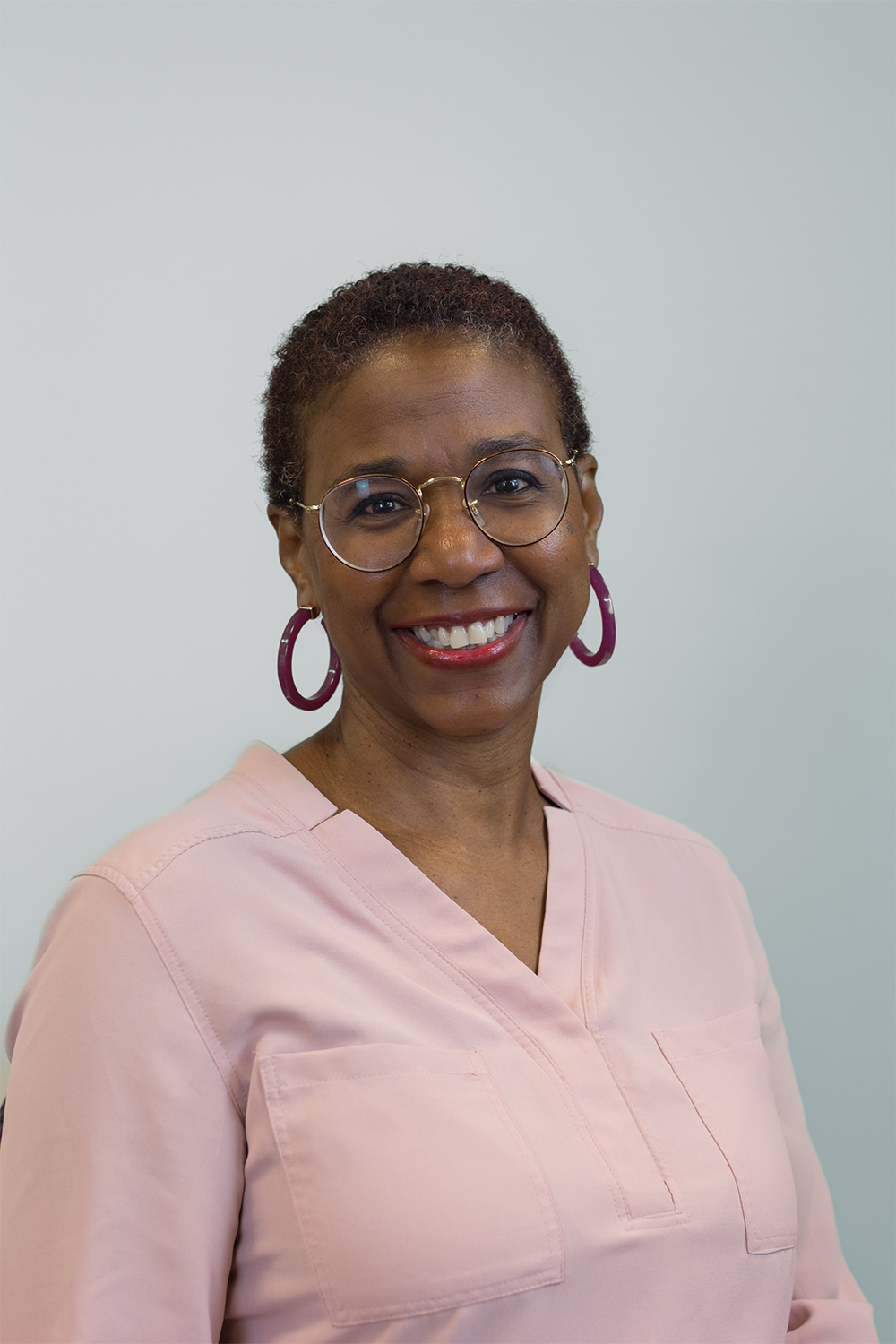
Leslie Fields-Cruz
Leslie Fields-Cruz, Executive Director, Black Public Media (BPM), joined Black Public Media in 2001 to manage its program development fund. She was named director of programs in 2005, VP of operations and programs in 2008, and, in 2014, was appointed to serve as BPM’s third-ever executive director. Under her leadership, BPM has cultivated new partnerships, diversified revenues, and initiated vital programs (360 Incubator+, PitchBLACK, and BPMplus) to support visionary talent and Black content development. She is the creator and executive producer of the award-winning series AfroPoP: The Ultimate Cultural Exchange. Leslie serves on the board of directors for New Era Creative Space and was the board president of New York Women in Film and Television (NYWIFT) 2022-2024.
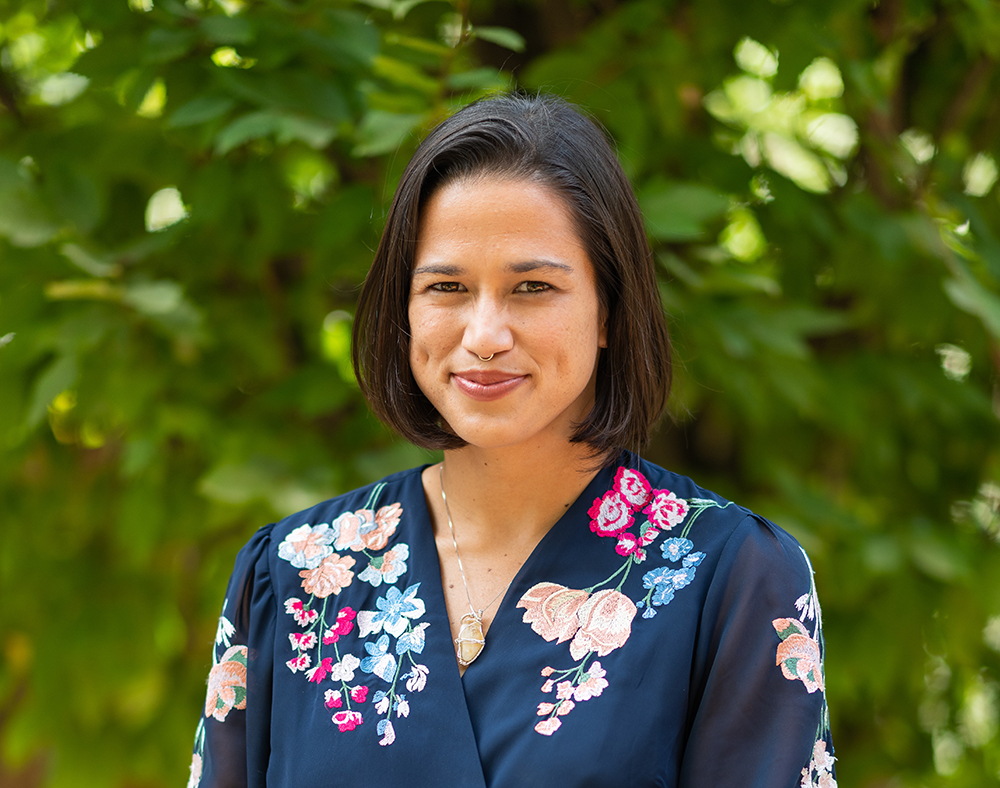
Laura Garbes
Laura Garbes is an Assistant Professor of Sociology at University of Minnesota – Twin Cities. She studies racism, whiteness, and cultural organizations. Her forthcoming book, Listeners Like Who? Exclusion and resistance in the public radio industry, is an examination of the racialization of voice, storytelling, and organizational life in public radio's past and present. It will be released under Princeton University Press in September 2025.
Allison Perlman
Allison Perlman is Associate Professor of History and Film and Media Studies at the University of California, Irvine. She is the author of Public Interests: Media Advocacy and Struggles Over US Television (Rutgers UP, 2016). She is currently writing a history of National Educational Television (NET).
Josh Shepperd
Josh Shepperd is an Associate Professor at the University of Colorado Boulder. He is author of Shadow of the New Deal: The Victory of Public Broadcasting (University of Illinois Press), which received the 2024 BEA Book Award and placed as a runner-up or finalist for the AJHA, AEJMC History, TLA, and New Deal awards. He is currently co-writing the "official" History of Public Broadcasting for the Corporation for Public Broadcasting (CPB) and Current with Allison Perlman and Mike Janssen. Josh additionally designs applied policy projects as continuing Sound Fellow at the Library of Congress and is director of the Radio Preservation Task Force.