
Learn how embracing uncertainty can strengthen decision-making, teamwork, and well-being in a rapidly changing world. Drawing on her book Uncertain, journalist and social critic Maggie Jackson shares new science, three practical modes of “uncertainty-in-action,” and strategies for navigating the unknown with more confidence.
Learning to Harness Uncertainty
July 10, 2025
Full Transcript
00:00:47.000 –> 00:00:57.000
Okay, looks like we’re leveling off. Two or more people joining in, so we’ll do housekeeping real quick. Thank you all for joining us for this webinar today. I’m Chad Davis, I’m the.
00:00:57.000 –> 00:01:07.000
Chief Innovation Officer at Nebraska Public Media, and also, um one of the co-founders of this group, Public Media Innovators, and on behalf of Amber Samdahl,
00:01:07.000 –> 00:01:29.000
PBS Wisconsin, and David Huppert at PBS North Carolina. Just want to say thanks for joining us. Um, like I said, I had to do a few housekeeping details to get started. Um, first of all, uh, thanks to everyone who came to the June webinar. We’ll pop a link in of where you can watch that on YouTube if you’re interested. Amber is always very prompt with the links, so….
00:01:29.000 –> 00:01:35.000
You can check that out there. Um…. And then, um….
00:01:35.000 –> 00:01:43.000
Let’s see, uh, a little tease for our August webinar, which is going to feature a couple of authors from
00:01:43.000 –> 00:01:54.000
Stanford’s D-School, or design school, David, uh, booked them, and we’re super excited because it’s all going to be about creative hustle. And, um….
00:01:54.000 –> 00:02:05.000
Like today’s speaker, they are, uh, folks we connected with at South by Southwest last year, so a little bit more on that in just a second. I want to do one final plug before we dive in.
00:02:05.000 –> 00:02:13.000
Uh, and one quick thank you. The thank you is to our friends at NETA for supporting this group, and just sort of helping us get the word out about these webinars.
00:02:13.000 –> 00:02:21.000
And then the plug is for a friend of the group, Cari Kozicki’s, uh, panel, uh, in a week.
00:02:21.000 –> 00:02:27.000
It’ll be July 17th at 2 p.m. Eastern. It’s a webinar that’s being presented with our friends at the Content PLC.
00:02:27.000 –> 00:02:37.000
And it is called Lean Times, Bold Visions. Project management in public media’s uncertain era. Now, she had no idea at the time that we were going to be doing a….
00:02:37.000 –> 00:02:47.000
A webinar on uncertainty, so I filled her in on that. Um, and she’s in the chat, but just, uh, just a heads up, you can, uh, pop over and register for that. Once we get done with the intros, we’ll….
00:02:47.000 –> 00:03:04.000
We’ll drop in, uh… we’ll drop in a link so you can register there. So, um, I would now like to thank Maggie Jackson for joining us and agreeing to speak. When David and I were in her session at South by Southwest, we were texting each other, even though we were sitting next to each other, because we didn’t want to be rude.
00:03:04.000 –> 00:03:11.000
And talk, but we were texting each other about, like, oh my god, how great this is, and, like, public media totally needs to hear this. And she was super generous.
00:03:11.000 –> 00:03:17.000
Uh, with us when we walked up afterwards, just cold, and said, like, hey, would you be willing to maybe talk.
00:03:17.000 –> 00:03:28.000
For this, uh, group that we have that gets together every month. And, uh, so, um, Maggie is someone who, like, often gets paid to speak, and she’s doing this, um.
00:03:28.000 –> 00:03:38.000
Uh, because, uh, she appreciates public media, so many thanks to her on that. Maggie splits her time between New England and New York. She is a journalist and columnist.
00:03:38.000 –> 00:03:47.000
For many, many years. Uh, she worked for the AP, uh, she worked for the Boston Globe, both as columnists, she has, uh.
00:03:47.000 –> 00:04:04.000
Reported and written from Japan, Tokyo, and also from London. Obviously from Boston and New England as well. And, um, she has, over the years, developed a certain interest in technology and its effects on people. And that led.
00:04:04.000 –> 00:04:14.000
To write this book, Uncertain, which has been nominated for a National Book Award. It was on many Best Books of 2024.
00:04:14.000 –> 00:04:25.000
List, and like I said, we saw her speak in Austin, and we were just completely blown away. So, Maggie, thank you for giving your time to us today, and uh….
00:04:25.000 –> 00:04:26.000
Let you take it away.
00:04:26.000 –> 00:04:38.000
Oh, thank you very much, Chad, and Amber, and David, and it’s great to be with you all today. I am indeed a huge supporter, fan, everything of public media.
00:04:38.000 –> 00:04:50.000
Um, not just coming from the mix, but, um, also just in general. Uh, so again, really an honor to be with you. I’m going to start off by sharing my….
00:04:50.000 –> 00:04:57.000
Um, my…. Powerpoint to begin, to get that going, and….
00:04:57.000 –> 00:04:59.000
Um, someone can tell me if it’s working. Okay, so we’re here.
00:04:59.000 –> 00:05:03.000
Yep, looks good, Maggie. Yeah.
00:05:03.000 –> 00:05:11.000
Um, and then, um…. Yeah, so I’ll just start in and definitely save time for.
00:05:11.000 –> 00:05:24.000
Questions. Um, so…. I like to, um, you know, especially when I’m in the room, but even virtually… actually, this is the first time I’ll try this virtually, but when I’m talking to people in the same room.
00:05:24.000 –> 00:05:37.000
I like to get a kind of an analog show of hands of one quick snap poll related to uncertainty. So, we’re gonna try it now, uh, pretty easy. Um, put in the chat.
00:05:37.000 –> 00:05:41.000
The one word that comes to mind when I say uncertainty.
00:05:41.000 –> 00:05:47.000
Um, so, and I’m gonna be flipping back and forth to all sorts of different screens, so….
00:05:47.000 –> 00:05:54.000
Maybe, Chad, you could, um. You know, say, you could read it out a little bit. The first….
00:05:54.000 –> 00:05:55.000
Three or four, what are those words? You could help me out here.
00:05:55.000 –> 00:06:03.000
Sir… what? Uh, well, I’ve wrote anxiety, uh, but people also wrote Anxiety Scary.
00:06:03.000 –> 00:06:09.000
Uh, fun, uh, or just kind of fun, funding, uh, fear, um, funding obviously very….
00:06:09.000 –> 00:06:10.000
Yeah.
00:06:10.000 –> 00:06:17.000
Topic for us. Queasy opportunity, uh, that’s an interesting one from Ann. Um….
00:06:17.000 –> 00:06:18.000
Okay, one more? Okay. Okay.
00:06:18.000 –> 00:06:22.000
Control… I see a lot… a lot of anxieties over and over again anxieties.
00:06:22.000 –> 00:06:29.000
Oh, wow, yes, exactly. Well, I’ll have to say that I’ve been doing this for, you know, more than a year, and.
00:06:29.000 –> 00:06:39.000
Generally, the first word that comes up is anxiety, where I go, whoever I’m talking to, whatever their profession in this world, it makes sense.
00:06:39.000 –> 00:06:49.000
Um, and then also, just, again, unscientifically, anecdotally, but about, uh, three-quarters of the words that I get are negative, and then….
00:06:49.000 –> 00:06:59.000
You see a positive word pop up, like opportunity, or…. Um, you know, even just chance, or exploration. So that’s really interesting, and we’ll….
00:06:59.000 –> 00:07:11.000
Unpack, I think, both of those elements today. Um, the first thing I’d like to say, actually, is that it is natural that we humans dislike uncertainty.
00:07:11.000 –> 00:07:21.000
Because, simplistically speaking, we survive by needing and getting answers. We need resolution wherever we are in the world.
00:07:21.000 –> 00:07:27.000
Uh, if you’re in the forest and you are starving, you need to know if that fruit is.
00:07:27.000 –> 00:07:35.000
Poisonous or delicious. Now, from there, it goes on. You know, you need to know if your boss is gonna be good for your career or bad for your career.
00:07:35.000 –> 00:07:42.000
But the question I am asking, and have been asking myself as I dug into the research on uncertainty is.
00:07:42.000 –> 00:07:49.000
What if we, in our contemporary society, have been pushing this innate, natural dislike of uncertainty.
00:07:49.000 –> 00:07:59.000
A bit too far. In other words, it… studies show, but I don’t think you even need the studies to know, that in our culture, uncertainty is seen as.
00:07:59.000 –> 00:08:12.000
Highly negative, and weakness, and inertia. Uh, it’s… there’s also evidence that there is a rising, quote-unquote, intolerance of uncertainty. I’ll try to unpack that a little bit.
00:08:12.000 –> 00:08:23.000
I just read, you know, one little political science study, and the conclusion, which is all about epistemic, or being open-minded toward other people’s opinions.
00:08:23.000 –> 00:08:34.000
And the… one of the conclu… one of the political scientists wrote, uh, there’s no more rare words in the American language today, uh, than I don’t know.
00:08:34.000 –> 00:08:54.000
Uh, which, you know, again, speaks to the certainty-centricity. Um, it’s also important to note that this didn’t come in yesterday. Um, the roots of what I think of as an allergy to uncertainty today are long and deep. We can point to hundreds of years of emphasis in the West on efficiency and speed.
00:08:54.000 –> 00:08:59.000
And we can also draw a link to the technologies that offer us.
00:08:59.000 –> 00:09:04.000
Crisp, neat answers, bullet points, etc. That changes what it means to know.
00:09:04.000 –> 00:09:11.000
But the exciting thing is, um, and what I’m here today to talk about, is that.
00:09:11.000 –> 00:09:18.000
There’s a new science, a new explosion of research on uncertainty.
00:09:18.000 –> 00:09:24.000
In all its guises that offer us a reframe, that basically offer us the chance to update our.
00:09:24.000 –> 00:09:36.000
Quite insufficient and outdated and mistaken understanding of this concept. So today, I’d like to talk about three pillars of uncertainty that can help us in 2025.
00:09:36.000 –> 00:09:40.000
Um, a kind of… it is a kind of wakefulness, I’ll explain.
00:09:40.000 –> 00:09:51.000
Uh, uncertainty is the linchpin to a human adaptability. And it’s also the rocket fuel of excellence in collaboration.
00:09:51.000 –> 00:09:56.000
Uh, and there is an urgency to this work of the reframe.
00:09:56.000 –> 00:10:05.000
Uh, because we do live, it’s not just our perception, we do live in a world of rising unpredictability, there are many, many different barometers. It’s not just.
00:10:05.000 –> 00:10:18.000
Uh, the, uh, you know, rates of use of the word uncertainty, maybe you’ve heard of that uncertainty index that economists like to refer to out of Stanford. It’s not just that, actually.
00:10:18.000 –> 00:10:29.000
Insecurity in job hours among many different populations arising. Uh, geopolitics, climate, extreme weather plans, you know, we can… we know it, we see it all. And of course.
00:10:29.000 –> 00:10:35.000
Um, you know, your field is in the ground zero, one might call it, of.
00:10:35.000 –> 00:10:47.000
Unpredictability today? I don’t know, how can public media. As important as it is, survive years of funding pressure, and today’s rollercoaster political policies.
00:10:47.000 –> 00:10:53.000
And what will younger listeners’ news feeds look like in 5 years, or 6 months?
00:10:53.000 –> 00:10:59.000
Um, so I’m not going to argue today that uncertainty is any kind of panacea.
00:10:59.000 –> 00:11:05.000
But, it is… science is showing us, an overlooked productive force.
00:11:05.000 –> 00:11:13.000
Uh, it’s not something to dread and fear, but actually to wield. It’s a cognitive tool that we can wield skillfully.
00:11:13.000 –> 00:11:27.000
And so, before I dig in further, I also want to just define uncertainty very briefly, um, because I bandied about that word, and we see it in the headlines, and we talk about it, and we don’t really.
00:11:27.000 –> 00:11:36.000
Explicitly define what we mean. Um, there are basically two major buckets. I mean, you can find a lot of different vocabulary, taxonomies, etc.
00:11:36.000 –> 00:11:51.000
Um, related to, uh, you know, language and research about uncertainty and different domains, like economics, etc. But there are two big buckets. Basically, and they’ll ring true to our lived experience, basically. Um, there’s.
00:11:51.000 –> 00:12:04.000
One… the one kind of uncertainty is alliatory, it’s called, and that is just basically our… I mean, the uncertainty out there. I like to call it unpredictability, volatility.
00:12:04.000 –> 00:12:08.000
Um, because, um, you know, that distinguishes it from the second kind.
00:12:08.000 –> 00:12:15.000
Um, and also just consider, uh, for a minute more, allietory uncertainty is.
00:12:15.000 –> 00:12:29.000
Basically, what we humans can’t fully know. So, um, for example, a storm might be headed your way, and despite the probabilistic modeling, AI-generated predictions.
00:12:29.000 –> 00:12:39.000
They can give you a toehold on likelihood. You don’t know if the storm is going to do X amount of damage, or even where it’ll land.
00:12:39.000 –> 00:12:45.000
That’s allietore, the uncertainty out there. And then second is epistemic uncertainty.
00:12:45.000 –> 00:12:54.000
That’s our psychological unsureness or uncertainty. It’s basically the human response to the unknown.
00:12:54.000 –> 00:13:02.000
So, whenever we, as organisms, meet up with anything new, unexpected, or ambiguous.
00:13:02.000 –> 00:13:08.000
We get the chance to recognize that we’ve reached the limits of our knowledge.
00:13:08.000 –> 00:13:20.000
We’re operating at the edge. That’s uncertainty. It’s not ignorance. It’s actually the idea that we’re caught short, we feel uneasy, and yet.
00:13:20.000 –> 00:13:28.000
Well, consider the storm example. Uh, should I evacuate? Should I turn off the TV? Should I go to bed? Should I call my friend?
00:13:28.000 –> 00:13:34.000
Uncertainty is a space of possibilities. It opens up the.
00:13:34.000 –> 00:13:43.000
Space between question and answer, and it is, you know, again, underscore, we dislike it, it’s highly, uh, it makes us.
00:13:43.000 –> 00:13:52.000
Uncomfortable. So, let’s, um, move… stay with that point. Again, the uncomfort of uncertainty.
00:13:52.000 –> 00:13:57.000
And, um…. Uh, talk a little bit about….
00:13:57.000 –> 00:14:18.000
Our brains on uncertainty. So, this is a pyramidal neuron. It’s actually the largest neuron in the brain. It makes up two-thirds of our cerebral cortex, the top layer of the brain. It’s kind of a big gun machinery in the cognitive world.
00:14:18.000 –> 00:14:33.000
Uh, and, uh, it’s very, very highly, uh, important. Plays an important role, these pyramidal neurons, in our human ability to assess and acknowledge and sense uncertainty.
00:14:33.000 –> 00:14:41.000
So, as I mentioned, whenever we meet up with something new, we feel uneasy, you know, the traffic jam, the storm, the.
00:14:41.000 –> 00:14:48.000
You know, which job to take, or whether or not you’re going to get fired, or all these sorts of.
00:14:48.000 –> 00:14:55.000
Existential, uh, on-down questions, and you are experiencing, basically, a stress response.
00:14:55.000 –> 00:15:03.000
That makes sense. Um, when we are uncertain neurotransmitters and hormones cascade through our body and brain.
00:15:03.000 –> 00:15:09.000
Instigating symptoms, like the racing heart, or the sweaty palms, etc.
00:15:09.000 –> 00:15:24.000
But, interestingly, just in the last decade and a half. Scientists have begun to unpack what’s happening in the brain on uncertainty, and have been discovering that there are some highly positive responses.
00:15:24.000 –> 00:15:40.000
Uh, when we’re uncertain. So, for instance, um, the pyramidal neurons act like almost little modems in the brain. They’re broadcasting the state of uncertainty, the idea that you’ve met up with something new or ambiguous.
00:15:40.000 –> 00:15:46.000
Uh, and your brain becomes more receptive on the whole, uh, to new information.
00:15:46.000 –> 00:15:51.000
Uh, another thing that occurs when you’re unsure is your working memory goes up.
00:15:51.000 –> 00:16:00.000
You’re a little bit on your toes, and also your focus sharpens. Uh, in fact, studies out of the University of Washington show that.
00:16:00.000 –> 00:16:08.000
Emergency room doctors who are in sticky clinical situations and who feel uncertain.
00:16:08.000 –> 00:16:13.000
Also, report that heightened attention, which, of course, helps them perform.
00:16:13.000 –> 00:16:22.000
Um, so uncertainty, it turns out, is. Good stress. Uh, and I love this quote by Joseph Cable, the neuroscientist.
00:16:22.000 –> 00:16:32.000
Uncertainty is the brain telling itself there’s something to be learned here. Scientists call this uncertainty a form of arousal.
00:16:32.000 –> 00:16:38.000
Uh, it’s actually putting you on your toes, it’s signaling that routine won’t do.
00:16:38.000 –> 00:16:46.000
That you’re outside of, you know, complacency should be at an end. It’s time to update your understanding of the world.
00:16:46.000 –> 00:16:56.000
And one important, important corollary here, which is, and especially vis-a-vis the anxiety and fear that pops up when we.
00:16:56.000 –> 00:17:07.000
You know, think about uncertainty. Uncertainty is not fear. The uncertainty response is arousal, as I mentioned. It’s actually a kind of performance mode.
00:17:07.000 –> 00:17:17.000
Whereas fear, which inhabits a different stress system, but a related stress system in your body and brain.
00:17:17.000 –> 00:17:26.000
Fear is related to a cognitive shutting down. And instigating survival mode, not performance mode.
00:17:26.000 –> 00:17:36.000
So you might get a beating heart. But at the same time, your blood is funneling away from your extremities toward the core to protect yourself.
00:17:36.000 –> 00:17:48.000
And allowing you only to do certain things, like flee, or fight, etc. So, we all understand, I think, intuitively that when we’re really afraid, we’re not able to make complex decisions.
00:17:48.000 –> 00:17:54.000
And so, one question I get asked, and that perhaps comes to mind is.
00:17:54.000 –> 00:18:04.000
How do we avert the fear, especially in a highly. Precarious life today, and then lean into uncertainty. How do you want to….
00:18:04.000 –> 00:18:11.000
Cultivate that performance mode, and there are different strategies, but one I’ll highlight is.
00:18:11.000 –> 00:18:24.000
To, in a challenging situation. Uh, we don’t want to fixate on outcome, which is kind of in a metaphorical way, the order of the day, fixating on outcome.
00:18:24.000 –> 00:18:30.000
But if you are, say. Giving a challenging presentation to a client.
00:18:30.000 –> 00:18:40.000
Uh, and you really need to be on your toes, and in performance mode. Uh, the worst thing you can do, uh, study after study shows, is to.
00:18:40.000 –> 00:18:51.000
Focus on, am I doing well? Uh, am I gonna get that bonus? Or this… or the deal? Am I going to seal the deal? Um, I’m not doing well. The boss is frowning at me.
00:18:51.000 –> 00:18:59.000
You can see that you are, by fixating on outcome, swiveling your cognitive resources away from.
00:18:59.000 –> 00:19:11.000
That epic chance that uncertainty offers you to be in arousal, to be in tune with the environment, and you’re focusing on, you know, you’re putting the cart before the horse, you’re focusing on.
00:19:11.000 –> 00:19:19.000
Not the process that gains you a good outcome, but the outcome itself. So that’s really important. And, um, it’s really interesting because.
00:19:19.000 –> 00:19:25.000
In sports, but also different performance, um, studies in the arts and things like that.
00:19:25.000 –> 00:19:34.000
Uh, one thing that we can do to, um, you know, stave off outcome fixation, or to basically swivel our attention back to that.
00:19:34.000 –> 00:19:40.000
Uncertain moment, and be in the moment, is to use something called cue words.
00:19:40.000 –> 00:19:52.000
Very simple. It’s not a mantra, which is sort of a way of focusing in a meditative way. A cue word is something that athletes use. They might say to themselves.
00:19:52.000 –> 00:19:59.000
Uh, in the game, Maggie, or focus now, and…. Just push their attention back into the moment.
00:19:59.000 –> 00:20:07.000
Um, in order to, again, open up to that curiosity that is there to tap.
00:20:07.000 –> 00:20:12.000
So…. I’ve talked a little bit about.
00:20:12.000 –> 00:20:20.000
The arousal of uncertainty, how uncertainty is good stress. Uh, and I think that it’s….
00:20:20.000 –> 00:20:28.000
Also really important to understand that we can think of that arousal, that good stress of uncertainty, as a kind of.
00:20:28.000 –> 00:20:38.000
The stance that a baseball player will take when they get in the batting box, or get out on the home plate, and they’re ready.
00:20:38.000 –> 00:20:49.000
And they’re taking the right stance. Uh, and that’s being open to the uncertainty, but that doesn’t mean the game has ended. They have to confront and play that ball.
00:20:49.000 –> 00:20:57.000
And so, basically, uh, you know, that’s a great analogy for uncertainty, because it’s not enough to just get on your toes.
00:20:57.000 –> 00:21:07.000
But also, um, we can utilize uncertainty skillfully. Um, it’s actually… uncertainty is an ally and accompaniment to good decision-making.
00:21:07.000 –> 00:21:17.000
So, as I began to discover this incredible news about uncertainty, basically, I asked myself, well, does that mean uncertainty.
00:21:17.000 –> 00:21:25.000
Plays a role in the most high-stakes life-or-death moments. Um, you know, in other words, would you want your surgeon.
00:21:25.000 –> 00:21:30.000
To be unsure in the middle of a crisis in the operating room. Uh, and so I….
00:21:30.000 –> 00:21:44.000
Dug into that question and embedded myself in operating rooms in Toronto, Canada. Uh, here we see a picture of Carol Ann Moulton, who’s a surgeon there, and who studies… she’s a surgeon.
00:21:44.000 –> 00:21:56.000
Scientist. She studies. Um, surgical judgment related to questions of uncertainty and crisis thinking, and she also is a highly renowned surgeon in her own right.
00:21:56.000 –> 00:22:12.000
Um, she helped me gain access to multiple operations. I stood literally on a stepstool a few feet from the patient inside the operating room with my little tape recorder. It was quite an amazing experience.
00:22:12.000 –> 00:22:17.000
Uh, and uh, I was wondering, you know, is it foolish or brilliant for a.
00:22:17.000 –> 00:22:26.000
For a surgeon to be, uh, uncertain in the middle of a crisis. And so the question becomes, what is an expert?
00:22:26.000 –> 00:22:31.000
Um, well, one morning, she and I were watching a, um….
00:22:31.000 –> 00:22:42.000
Liver operation. Uh, one of Canada’s top surgeons was. Basically removing the cancerous half of a liver of a schoolteacher. Uh, and she was my guide to what was happening in the moment.
00:22:42.000 –> 00:22:47.000
Uh, the surgeon was, you know, exactly as we would expect. He was.
00:22:47.000 –> 00:22:54.000
You know, uh, fluent and quick, and watching the clock, and barking orders. He knew just what to do.
00:22:54.000 –> 00:23:01.000
Except… until the moment the operation came to a grinding halt.
00:23:01.000 –> 00:23:11.000
Uh, the surgeon thought that he and his team had cut a little organ called the bile duct, which, if severed, means the patient usually doesn’t survive.
00:23:11.000 –> 00:23:24.000
Uh, and uh, I began to think. You know, what is… what is an expert? Who are the sages of our time, of our crisis-laden times?
00:23:24.000 –> 00:23:32.000
Um, is there more to the story than the expert who, um, strides into the room and is quick and sure, which is the….
00:23:32.000 –> 00:23:36.000
You know, person we put on the pedestal in leadership and many professions.
00:23:36.000 –> 00:23:43.000
So, let’s walk back just a minute, and I have a question for you. How do we become an expert?
00:23:43.000 –> 00:23:49.000
Uh, and, uh, let’s take a minute and put a… I’ll just take a few in the chat. Um, you know, what….
00:23:49.000 –> 00:23:56.000
Does it entail? I’ll just throw out learning, you know, we have to go to school. Um, and maybe, Chad, you can help me again with just.
00:23:56.000 –> 00:23:58.000
Any…. Yeah.
00:23:58.000 –> 00:24:06.000
Isaac says practice, making mistakes from Marcia. Um, I was gonna say experience, I won’t type it, but that’s me, yeah.
00:24:06.000 –> 00:24:07.000
Oh, Deborah says experience, yep.
00:24:07.000 –> 00:24:20.000
Yes. Yes, I love that already. You guys…. You nail it so quickly. Wow, great. So, learning, experience, practice, and I love mistake, uh, making mistakes, because that’s a great segue into what I’m going to be talking about.
00:24:20.000 –> 00:24:27.000
Basically, we become experts. By, um, you know, all of these facets.
00:24:27.000 –> 00:24:36.000
And we eventually, uh, gain or accrue, build mental models and heuristic shortcut thinking.
00:24:36.000 –> 00:24:43.000
Based on our knowledge, and then we become people who can know at a glance just what to do.
00:24:43.000 –> 00:24:50.000
Um, the doctor hears the patient say, chest pains, I’m experiencing chest pains, and then he or she thinks.
00:24:50.000 –> 00:24:56.000
Heart attack, that’s heuristic thinking. Um, very fluent, very quick, and….
00:24:56.000 –> 00:25:09.000
Very effective, a hugely impressive part of expertise, except. That it works only in predictable situations where our old knowledge.
00:25:09.000 –> 00:25:14.000
Does carry the day, where the mental model of what to do is a nice, clean fit.
00:25:14.000 –> 00:25:20.000
With what the problem is at hand. You’ve seen it before, you know what to do.
00:25:20.000 –> 00:25:27.000
Eventually, and sometimes not… it doesn’t take very long, experts fall into carryover mode.
00:25:27.000 –> 00:25:32.000
They begin to carry over old solutions and apply them to even new, dynamic.
00:25:32.000 –> 00:25:40.000
Those new, unexpected situations. Um, so one study, or numerous studies in different domains show that years of experience.
00:25:40.000 –> 00:25:51.000
Our only weekly or not correlated at all with skill and accuracy. Again, we’ve seen that in any profession. The person who’s been there, know there, done it.
00:25:51.000 –> 00:25:56.000
And they just begin to fade, and they can’t cope with the new.
00:25:56.000 –> 00:26:00.000
Um, so, just in, um, you know, again, in new research.
00:26:00.000 –> 00:26:08.000
Uh, experts on expertise, so to speak, researchers, scientists, have begun to uncover a new.
00:26:08.000 –> 00:26:21.000
Higher echelon of expertise called adaptive. These are the experts who, A, spend more time on average diagnosing a new, complex problem than even novices do.
00:26:21.000 –> 00:26:31.000
Just think about that for a minute. They’re not, they’re quick and they’re sure in the predictable routine, but they take the time to, what I call, inhabit the question.
00:26:31.000 –> 00:26:38.000
The second marker of. A routine… I mean, adaptive expertise is that they widen the frame of their understanding.
00:26:38.000 –> 00:26:49.000
So, in business… strategic business decisions. Um, are made, uh, a majority of the time based on one option and running with it.
00:26:49.000 –> 00:27:00.000
But what the expert in a new situation wants to do is think of multiple options, and then third characteristic is they test and evaluate that.
00:27:00.000 –> 00:27:07.000
Could be through thought experiments, could be through a focus group, etc. I call it take two. You want to.
00:27:07.000 –> 00:27:16.000
With, you know, stop the carryover mode and begin to think on the edge. These are the people who know when and how to be unsure.
00:27:16.000 –> 00:27:22.000
Uh, and so here are some…. Uh, here are some, um….
00:27:22.000 –> 00:27:29.000
Kind of… uh, wait a minute, um…. You know, markers of routine versus adaptive expertise.
00:27:29.000 –> 00:27:41.000
Uh, you know, routine…. Experts, um, you know, the normal, quick, fluent expert, you know, do not explore new problems. They hustle past them and jump to conclusions.
00:27:41.000 –> 00:27:48.000
Um, they fall into that trap of carryover mode, and defend their quickness and sureness as their badge of honor.
00:27:48.000 –> 00:28:02.000
Um, the adaptive expert inhabits the question, widens and deepens their frame of understanding. In essence, it all boils down to listening to the stories that the problem, not their assumptions, wants to tell.
00:28:02.000 –> 00:28:11.000
Uh, and also, this, remarkably, is an approach not just to a crisis situation or a prob- a new problem.
00:28:11.000 –> 00:28:21.000
But to your career. Adaptive experts are shown to continually take on harder challenges. They operate at the edge of their knowledge.
00:28:21.000 –> 00:28:33.000
They welcome, um, errors. Um, hack tip to whoever who said that. Um, so Adaptive Expert is now being taught, expertise is being taught in design, in medicine, in engineering, in education.
00:28:33.000 –> 00:28:40.000
Um, it’s… it’s kind of an antidote, I like to think, to Marshall McLuhan’s idea of all-at-oneness.
00:28:40.000 –> 00:28:45.000
We sort of think in this age when time and space have collapsed, that.
00:28:45.000 –> 00:28:50.000
We can collapse the space between question and answer, and that doesn’t work.
00:28:50.000 –> 00:28:54.000
When we need to do a little more, and to harness our uncertainty.
00:28:54.000 –> 00:29:02.000
So, how, where’s a practical tip related to adaptive expertise? Um, well, ask why questions.
00:29:02.000 –> 00:29:19.000
Ask what-if questions, you know, inhabit in… inhabit the problem. Um, these kind of questions break the routine thinking that we are so, um, you know, so easily allured into, um, you know, running with.
00:29:19.000 –> 00:29:26.000
Um, and one particular very well-proven strategy, uh, is called Consider the Opposite.
00:29:26.000 –> 00:29:39.000
Um, that is if you’re faced with a new problem. And you are investigating a diagnostic option about that problem, well, then you might also want to.
00:29:39.000 –> 00:29:43.000
Put on the opposite lens of thinking. Now, what do I mean by that?
00:29:43.000 –> 00:29:50.000
For instance, if you are…. Uh, interviewing for a client-facing role on your team.
00:29:50.000 –> 00:29:59.000
Uh, and you know that person has to deal with people all the time, and so you’re asking job candidates questions to draw out their.
00:29:59.000 –> 00:30:12.000
Extroversion, well, consider the opposite. Ask questions to find out if they’re introverts. Now, you know you don’t want an introvert, it’s not a binary decision, but you might just elicit.
00:30:12.000 –> 00:30:21.000
Information that shows you someone who can deal with people deftly, but also reflect or have those quiet moments.
00:30:21.000 –> 00:30:28.000
Um, you’re getting the fuller picture if you consider the opposite. And in listening to your previous podcast.
00:30:28.000 –> 00:30:39.000
I think in January, about the future of the field. I love the example by Natalie Hill, Chief Audience Officer at KCRW, who, you know, in terms of.
00:30:39.000 –> 00:30:47.000
Um, trying to help the station, uh, deal with this difficult future. You know, they were trying to see the talent beyond the journal.
00:30:47.000 –> 00:30:53.000
Uh, that meant giving play to a social content creator who’s also a satirist.
00:30:53.000 –> 00:31:07.000
It meant, also, she suggested that, um, you know, giving the… making employees other than journalists, storytellers. So I love that, because that’s really, uh, flipping the question and finding some really innovative answers.
00:31:07.000 –> 00:31:17.000
Um, so…. Just to get you back to the surgeon story, uh, and let you know that the surgeon did not kill the patient to my and their relief.
00:31:17.000 –> 00:31:25.000
Um, it was a very dire moment, but afterwards, the two, Caroline Moulton and the senior surgeon, who will not be named.
00:31:25.000 –> 00:31:32.000
Decamped to the cafeteria, and had a kind of, pun intended, I guess, post-mortem on the situation.
00:31:32.000 –> 00:31:35.000
He said he was ashamed at what it… at this near miss.
00:31:35.000 –> 00:31:50.000
Um, but he, again, defended his speed and his sureness as a badge of honor, whereas Carol Ann Moulton is really… her work is actually making ripple effects, it’s being influential outside of the surgical world.
00:31:50.000 –> 00:31:57.000
I mean, she’s actually holding up a new model of expertise, the adaptive expert, someone who has.
00:31:57.000 –> 00:32:07.000
Great skill, and yet humility. And I love this quote by her, when you’re uncertain, that’s when you care.
00:32:07.000 –> 00:32:14.000
So, I’ve talked about uncertainty as good stress, the stance that you take to.
00:32:14.000 –> 00:32:22.000
Contend with the unknown. And I’ve talked a little bit about how uncertainty is an ally, an accompaniment every step of the way in.
00:32:22.000 –> 00:32:29.000
Uh, decision-making, we can learn to wield it skillfully. Uh, it is part of the mix, not something to deny and avoid.
00:32:29.000 –> 00:32:38.000
Uh, and I’ll just close by talking a little bit about, um, the social side of uncertainty, because that’s really important. It’s not just a solo act.
00:32:38.000 –> 00:32:47.000
Uh, basically, we can utilize uncertainty as a bridge to others who we oppose, or.
00:32:47.000 –> 00:32:53.000
Categorize or stereotype. That’s important. Uncertainty, there are strategies that can help us.
00:32:53.000 –> 00:33:01.000
Jostle our assumptions and our natural tendency to categories in order to engage with others. Very important.
00:33:01.000 –> 00:33:08.000
But I think I also researched. And I think it’s very important not to lose sight of.
00:33:08.000 –> 00:33:17.000
Our side, you know? In other words, we can use uncertainty in a world of polarization strategically to help us understand them.
00:33:17.000 –> 00:33:23.000
But also to combat the complacency of we, the closed-mindedness of our team.
00:33:23.000 –> 00:33:28.000
Our unit, our type of people, etc, whatever you want to call it.
00:33:28.000 –> 00:33:37.000
Um, so I did a deep dive in the research to a NASA team, the Mars Exploration Rover mission.
00:33:37.000 –> 00:33:42.000
Um, that is one of the most… considered one of the most innovative in space history.
00:33:42.000 –> 00:33:48.000
Um, they are the team that, over years, more than a decade, almost two, I think.
00:33:48.000 –> 00:33:58.000
Have been putting these rovers, these robots, on Mars. Uh, an incredible feat. They’re also one of the most studied of, um, teams in the world.
00:33:58.000 –> 00:34:03.000
Um, really, I mean, every kind of social scientist has embedded themselves there.
00:34:03.000 –> 00:34:10.000
Um, so one day, one little saga from the books, uh, uh, the history books, so to speak.
00:34:10.000 –> 00:34:16.000
One time, I think it was 2009, someone on this Mars team.
00:34:16.000 –> 00:34:23.000
Uploaded faulty software commands to the rover, one of the rovers on Mars.
00:34:23.000 –> 00:34:29.000
Jeopardizing a, you know, device worth hundreds of millions of dollars.
00:34:29.000 –> 00:34:38.000
And so the leaders acted fast. Uh, they called an all-hands meeting after actually a weekend in which they put the rovers to sleep.
00:34:38.000 –> 00:34:44.000
Sent everyone home to reflect, and called an all-hands meeting. You know, everyone had to come, virtually or otherwise.
00:34:44.000 –> 00:34:54.000
And, you know, one would think at that moment. In that, you know, very threatening situation, what did they say? I mean, did they say.
00:34:54.000 –> 00:34:58.000
Let’s get back on the same page. You know, we’ve got a mission to do.
00:34:58.000 –> 00:35:07.000
In fact, they said the opposite, and it shows us a lot about the usefulness of uncertainty, the power of uncertainty in.
00:35:07.000 –> 00:35:20.000
Collaborative social situations. Um, so… we all need agreement, of course. I mean, that is the goal when you’re on a project, or hammering out a new, you know, product, or etc.
00:35:20.000 –> 00:35:28.000
But agreement. Can be an opiate to a team very rapidly, no matter how diverse the team is.
00:35:28.000 –> 00:35:36.000
Um, the teams that are in agreement begin to see themselves as more similar than they really are.
00:35:36.000 –> 00:35:42.000
They become less willing to challenge one another, they become less creative, less accurate.
00:35:42.000 –> 00:35:48.000
And they lose sight of their performance declines. They actually… teams in agreement.
00:35:48.000 –> 00:35:56.000
Rapidly rate themselves as doing jolly well, because they love this ease and fluency of agreement.
00:35:56.000 –> 00:36:03.000
Um, this is true whether you’re on the Supreme Court, in sororities, on campuses, in workplaces, on corporate boards.
00:36:03.000 –> 00:36:10.000
And even on the slopes of Mount Everest. This is a wonderful picture, uh, taken by Evan Green.
00:36:10.000 –> 00:36:14.000
Uh, who, um, was, you know, on a… on the first.
00:36:14.000 –> 00:36:19.000
Um, you know, Summit, the first expedition recently to Summit Mount Everest.
00:36:19.000 –> 00:36:27.000
And the expedition members were all people of color. It was an incredible, uh, incredible, and he gave me permission to.
00:36:27.000 –> 00:36:36.000
Kindly use this photograph. Um, studies have shown that. Mount Everest climbing teams that are diverse in knowledge and experience.
00:36:36.000 –> 00:36:43.000
You know, they put together people who are veterans, and people who are newbies on… in climbing in the Himalayas, etc.
00:36:43.000 –> 00:36:48.000
Um, actually, are more likely to suffer the death of a climber.
00:36:48.000 –> 00:36:57.000
If they emphasize an all-for-one mentality. They literally become blind to the diversity among them.
00:36:57.000 –> 00:37:04.000
The full circle expedition, I asked, was not one of those. They constantly listened to all voices.
00:37:04.000 –> 00:37:11.000
They constantly, um, you know, were, you know, quite open to exactly the strategies that I’m going to talk about, because.
00:37:11.000 –> 00:37:18.000
What’s the antidote to this toxic agreement that creeps in so quickly? It is….
00:37:18.000 –> 00:37:28.000
Disagreement, of course. Uh, sounds logical. When people air their differences respectfully, when they disagree, when they allow dissenting voices.
00:37:28.000 –> 00:37:43.000
You know, creativity flourishes, accuracy is raised, uh, discussions intensify. And the quote-unquote hidden profile of individual information, uh, that is overlooked so often in groups.
00:37:43.000 –> 00:37:53.000
Um, is unearthed, which helps the team move forward. Now, why is this? We might imagine in a world of polarization and divisions.
00:37:53.000 –> 00:38:00.000
Uh, that, well, disagreements work because the right answer, the right side wins.
00:38:00.000 –> 00:38:11.000
Or we might say, ah, the dissenter. Offers the right answer, and everybody follows behind on, you know, follows them, and then agreement.
00:38:11.000 –> 00:38:16.000
Happily occurs. It’s wrong. Study after study shows.
00:38:16.000 –> 00:38:24.000
That even dissenting or disagreeing opinions that are flat-out wrong. That are in error boost performance.
00:38:24.000 –> 00:38:31.000
Because…. Disagreement actually should, uh.
00:38:31.000 –> 00:38:41.000
Create, uh, productive uncertainty. Disagreement actually instigates a kind of new, skeptical, questioning mindset.
00:38:41.000 –> 00:38:46.000
It’s a little bit of a surprise, which is exactly how humans work.
00:38:46.000 –> 00:38:50.000
Um, so that is real… that was a very, very important.
00:38:50.000 –> 00:39:02.000
A part of this MER team. As one Princeton sociologist said to me, uncertainty and disagreement, that’s how this team succeeded for so long, that’s why we’re still talking about them.
00:39:02.000 –> 00:39:08.000
And in fact, studies show that 20% of conversations on the MERD team.
00:39:08.000 –> 00:39:25.000
Uh, involved micro-conflicts, and all of these. Productive disagreements involved expressions of uncertainty. Like, I don’t know, but maybe you were… I read the transcript, and it’s subtle. These are not yelling matches by any way, shape, or form.
00:39:25.000 –> 00:39:31.000
Um, one granular kind of takeaway that we can all, I think, borrow from the Mars team.
00:39:31.000 –> 00:39:38.000
Is something called a listening ritual. Uh, so after that uploading of the faulty commands.
00:39:38.000 –> 00:39:51.000
Uh, in every meeting going forward, whether a small or a big meeting, uh, the manager in charge of the meeting was responsible for ending the call, or the in-person meeting.
00:39:51.000 –> 00:40:05.000
By asking two questions. Is there anybody who doesn’t understand? And is there anything we disagree with? And important point, of course, is that the Mars Exploration Rover meeting people.
00:40:05.000 –> 00:40:13.000
Um, you know, celebrated people who spoke up, they didn’t treat them as pains or jerks.
00:40:13.000 –> 00:40:23.000
Um, so it’s… they literally said at that all-hands meeting, the leaders of the mission said, we need to get back to the, quote, rigor of questioning.
00:40:23.000 –> 00:40:28.000
That we once had. They didn’t want everybody to remain on the same page.
00:40:28.000 –> 00:40:34.000
Um, and today, I mean, even before the current assaults on DEI.
00:40:34.000 –> 00:40:40.000
Uh, companies have been, uh, you know, studied, and there’s a great push to.
00:40:40.000 –> 00:40:53.000
Smooth over the friction of diversity. A third of employees say they avoid conflict at altogether, and most, you know, high levels are not trained for it whatsoever.
00:40:53.000 –> 00:41:04.000
Um, so another takeaway other than the listening ritual, we can utilize in our own lives, um, is, um, to not be afraid of hedge words.
00:41:04.000 –> 00:41:14.000
Hedge words are…. Words like maybe, words like sometimes, could be, the kind of words that I saw in those Mars transcripts all over the place.
00:41:14.000 –> 00:41:24.000
Um, the word, like, maybe, which seems wishy-washy, and we equate with weakness, is actually, in many studies, and particularly out of Harvard of executives.
00:41:24.000 –> 00:41:31.000
Uh, actually, um, linked to people thinking that person is approachable.
00:41:31.000 –> 00:41:42.000
Uh, it signals that you’re open to others’ points of view, and linguistically, a word like maybe, or a hedge word, signals that there is something more to know.
00:41:42.000 –> 00:41:52.000
And that’s… couldn’t be more important as a launch pad. For learning. Uh, so maybe power is really important for a group.
00:41:52.000 –> 00:42:05.000
I’ll just, uh, quickly, uh, uh, conclude. Um, as I mentioned, volatility arising, unpredictability, etc. The question is, how will we respond?
00:42:05.000 –> 00:42:11.000
And the science is in. We should not be equating uncertainty with weakness.
00:42:11.000 –> 00:42:19.000
It’s critical for adaptability, resilience. Um, I’m… I’m actually hopeful, because I was saying before the call.
00:42:19.000 –> 00:42:26.000
That, uh, so many people are interested in uncertainty, partly because the levels are so high.
00:42:26.000 –> 00:42:34.000
But to be so interested in something that we know is uncomfortable, uh, is really heartening, and the way forward.
00:42:34.000 –> 00:42:42.000
Um, in the business world, there’s some tremendous recognition of the power of ambivalence for leaders.
00:42:42.000 –> 00:42:53.000
In medicine, some young doctors are being taught to bolster their tolerance of uncertainty, to gain better diagnostics, and also to avert burnout and anxiety.
00:42:53.000 –> 00:43:03.000
In AI, one of the hottest topics. Is Unsure AI, uncertainty, objective uncertain AI, technically speaking.
00:43:03.000 –> 00:43:10.000
In which robots and models are being designed to be unsure of their aims so that they become more flexible in their goals.
00:43:10.000 –> 00:43:16.000
And the human can become a teacher, and also safely work with.
00:43:16.000 –> 00:43:23.000
Um, you know, currently, uh, you know, tunnel vision, literal-minded, dangerous AI.
00:43:23.000 –> 00:43:37.000
Finally, in psychology, there’s a personality trait called. Uh, intolerance of uncertainty, I think I mentioned at the beginning, that’s, uh, kind of a personality trait, like extroversion or shyness.
00:43:37.000 –> 00:43:43.000
We all land somewhere, but in a nutshell, if you’re intolerant of uncertainty.
00:43:43.000 –> 00:43:51.000
You’re more likely to use denial and avoidance in crises, like COVID, and you’re also C, uncertainty as a threat.
00:43:51.000 –> 00:44:02.000
It’s highly linked to mental disorders, challenges like anxiety. Um, people who are more tolerant of uncertainty, uh, are more flexible thinkers.
00:44:02.000 –> 00:44:07.000
Who see uncertainty as a challenge, not a picnic, but a challenge.
00:44:07.000 –> 00:44:22.000
And many psychologists… I wrote an op-ed in the New York Times, uh, which is on my website, and many different interventions are now treating anxiety just by helping people bolster their tolerance of uncertainty.
00:44:22.000 –> 00:44:30.000
Um, during COVID, I moved up to the shore, out of the city, uh, the pools closed, I’m a swimmer, and I took to.
00:44:30.000 –> 00:44:39.000
The ocean. Uh, it took me a couple years, even as I was writing this book, to realize that, well, I knew it was very strengthening physically, and.
00:44:39.000 –> 00:44:45.000
There was a sociable element, but. I finally realized why this was such a powerful experience.
00:44:45.000 –> 00:44:50.000
It was my daily dose of uncertainty, because that’s how we.
00:44:50.000 –> 00:44:57.000
Up, uh, tolerance of uncertainty by continually biting off little pieces of the unknown.
00:44:57.000 –> 00:45:02.000
Delegate more at work, try new restaurants, go to a country you don’t speak the language.
00:45:02.000 –> 00:45:12.000
The ocean is a…. Hotbed of unknowns, even if you’ve got the app, even if you’ve been there before, even if you know the beach.
00:45:12.000 –> 00:45:22.000
Um, so I’m testing and practicing, and the lesson here is that there are opportunities all around us to gain skill in uncertainty.
00:45:22.000 –> 00:45:29.000
Um, so there’s a little recap. I’m very, very happy to, uh, you know, open, uh, up to, up to questions.
00:45:29.000 –> 00:45:36.000
Uh, and just, if you remember anything about this talk, just remember uncertainty is wisdom in motion.
00:45:36.000 –> 00:45:41.000
Thank you. And I’ll stop sharing.
00:45:41.000 –> 00:45:50.000
Or maybe you’ll keep it on for a minute. What do you think?
00:45:50.000 –> 00:45:53.000
You’re mute. You’re mute.
00:45:53.000 –> 00:45:54.000
That explains why no one was responding to me. Okay, great.
00:45:54.000 –> 00:45:55.000
Yeah, Chad, you’re muted.
00:45:55.000 –> 00:45:57.000
I can….
00:45:57.000 –> 00:46:03.000
Nope, always good. Um, so we do have some questions, um….
00:46:03.000 –> 00:46:13.000
And, uh, let me dig into this. Um, so, um…. Andrea Kejara, I believe it’s Andrea’s at New Mexico PBS, uh, asks, um.
00:46:13.000 –> 00:46:26.000
Maggie, can you say more about how to divert fear when it arises from uncertainty, especially for people who have a trauma response to uncertainty and have.
00:46:26.000 –> 00:46:27.000
Sure, yes, yes, and it’s a… it’s a big topic these days.
00:46:27.000 –> 00:46:30.000
That’s sort of linked have… and certainly linked to fear.
00:46:30.000 –> 00:46:46.000
But I think, you know, we can recognize that stress symptoms are not necessarily fear, that it is the body’s way of, um, putting us on our toes. That’s a really important reset for the mind. Um, then when, you know, and we are.
00:46:46.000 –> 00:46:53.000
As humans exquisitely sensitive to uncertainty. If I show you 3 words.
00:46:53.000 –> 00:47:04.000
Very happy war. By the time your mind gets to war, it’s instigated a brainwave related to the anomaly in the language and the surprise therein.
00:47:04.000 –> 00:47:17.000
Um, we also can discern between expected and unexpected uncertainty. What does that mean? Expected uncertainty is, I know there’s always a traffic jam on a certain corner when I’m trying to get into the city.
00:47:17.000 –> 00:47:32.000
Uh, that’s expected. Unexpected is a whole other measure, so, uh, acetylcholine is released instead of norepinephrine. Um, I think I’m getting that right. But anyhow, uh, you know, we are exquisitely attuned.
00:47:32.000 –> 00:47:53.000
Pick up on those symptoms, tune into yourself. Uh, that’s why it’s so bolstering and strengthening to try little incremental, you know, try a new ice cream flavor when you’ve, you know, eaten mocha chip your whole life, or let your kid pack their suitcase for their vacation when you really want to get your hands on that little suitcase.
00:47:53.000 –> 00:47:58.000
Uh, these sorts of little things are… I love the fact that psychologists are….
00:47:58.000 –> 00:48:07.000
Doing tremendous work in the uncertainty field in… with these very doable steps. I think that’s really important.
00:48:07.000 –> 00:48:18.000
Um, and I’ll say one thing. I wrote about a 12-week intervention to treat intractable anxiety in 12 weeks of just learning to bolster their.
00:48:18.000 –> 00:48:30.000
Uh, tolerance of uncertainty, people’s worries levels, you know, at that very highly diagnosed level, their worry levels fell to about the same as the general population.
00:48:30.000 –> 00:48:37.000
Wow. I mean, and their depression and their anxiety levels. So, um, really powerful stuff.
00:48:37.000 –> 00:48:45.000
Cool. Um, Deborah Muller, um, builds on Andrea’s question and says, could you also talk about how to deal with the, sort of.
00:48:45.000 –> 00:48:52.000
Mental exhaustion, I think, is what she’s referring to. The exhaustion that comes as a result of being in that uncertain headspace. Is there any….
00:48:52.000 –> 00:48:54.000
Put writing on that.
00:48:54.000 –> 00:49:02.000
Um, well, I would say, and I think it’s… I don’t minimize or… I truly acknowledge.
00:49:02.000 –> 00:49:10.000
That the degree of uncertainty in our lives makes a huge difference, and the stress is exhausting. But at the same time.
00:49:10.000 –> 00:49:26.000
Again, you know, roboticists, these clinical psychologists, the doctors, the CEOs, the people who are studying it or begin to pick up on the strengthening of uncertainty, use the same word again and again to me. It’s liberating.
00:49:26.000 –> 00:49:32.000
If we can face the world. With fear… without fear.
00:49:32.000 –> 00:49:42.000
But rather with wonder and curiosity, then there is a whole lot that is lifted off your shoulders. I mean, I personally find that.
00:49:42.000 –> 00:49:51.000
This research has changed my life, this is my third book, it’s changed my life more than any others. It’s allowed me to find the curiosity, even in the most.
00:49:51.000 –> 00:50:09.000
Difficult situations. And, um, again, I’m not minimizing what people are going through. We are culturally attuned to centricity. We constantly think uncertainty is synonymous with anxiety when, uh, by definition, anxiety is.
00:50:09.000 –> 00:50:16.000
Fear of the unknown and uncertainty is the space of possibilities. And we don’t always want it.
00:50:16.000 –> 00:50:26.000
People have written to me who are caregivers, or people with cancer, and, you know, we don’t want anyone to be in that situation, but if IF.
00:50:26.000 –> 00:50:33.000
We can be in even that kind of situation and explore, rather than hide or fear or doubt.
00:50:33.000 –> 00:50:40.000
Or deny, then we’re a lot better off, given the circumstances we have.
00:50:40.000 –> 00:50:57.000
I’m oddly reminded of, like, cinema studies and the theory that in horror films, once you show the monster, it’s not so scary anymore. Like, it’s almost the uncertainty of the monster that, like, amps up the anxiety, and once you kind of know what it is, there’s that point.
00:50:57.000 –> 00:51:04.000
In the film, where it sort of, uh, it becomes a different type of film, it’s less psychological and more action, so… Um, I….
00:51:04.000 –> 00:51:27.000
Yep, and also the, um, the work on bolstering your tolerance of uncertainty is related. It’s a… it’s a riff off of exposure therapy. So instead of being exposed to a dog, you’re exposing yourself to the unknown. And one of the assignments that Ohio State researchers have given young people is to answer their phone without caller ID.
00:51:27.000 –> 00:51:33.000
That is exposing themselves to uncertainty, and young people have told me.
00:51:33.000 –> 00:51:38.000
That they find that terrifying. We need practice.
00:51:38.000 –> 00:51:45.000
Yes, I can see that. I remember doing that as a young person, and I don’t know that I’d want to.
00:51:45.000 –> 00:51:54.000
Do that today. So, um…. Isaac asks a question, uh, that you kind of touched a little bit on, um, because you talked about writing your third book.
00:51:54.000 –> 00:51:59.000
And uncertain. He asks, what role did uncertainty play in writing your book?
00:51:59.000 –> 00:52:07.000
Oh, that’s such a great… that’s such a great question! Um, yes, I mean, I… it started with distracted, my second book.
00:52:07.000 –> 00:52:13.000
Where I became interested… attention is a vehicle. If you have focus, you’re applying it to something.
00:52:13.000 –> 00:52:20.000
That’s how I got to this third book, because I wondered what kind of thinking do we need in the digital age when everything is so quick and brief?
00:52:20.000 –> 00:52:29.000
Um, and, you know, I found that there were stages of research that involved frustration before and even after you gain focus.
00:52:29.000 –> 00:52:37.000
Uh, and that made me think, oh, I’m not stupid, because I’m frustrated with these long, deep questions and these big.
00:52:37.000 –> 00:52:45.000
Research pieces, um, and I find the same thing with uncertainty, is that it doesn’t remove.
00:52:45.000 –> 00:53:00.000
The idea that I have to be in the weeds to un… even just to understand the liver, uh, you know, to be in that operating room, I have to be in the weeds, I have to synthesize and analyze and pull things together, take years and years for me to even.
00:53:00.000 –> 00:53:09.000
You know, determine the idea for a book. Uh, and yet, I now know it’s a natural part of the equation, and again, that.
00:53:09.000 –> 00:53:19.000
That kind of silences some of those critical voices in your head, because the messaging in our society is if you don’t get it quick, you are stupid.
00:53:19.000 –> 00:53:31.000
And we think we have to enter the meeting with the answer, and etc, etc, etc. What kind of messages are we giving our children? Um, no time to think, no time to daydream, no time to drift.
00:53:31.000 –> 00:53:39.000
Um, just actually one little takeaway. There’s a whole chapter on memory and pausing, because uncertainty is a kind of suspense.
00:53:39.000 –> 00:53:46.000
You are not acting immediately, you are actually holding off action in order to find the better answer.
00:53:46.000 –> 00:53:59.000
But one little thing is, take 5 minutes between, um, kind of units in your day, interviews, meetings, etc, pause and do absolutely nothing, and your memory for what came before will be bolstered by 20%.
00:53:59.000 –> 00:54:06.000
Because you’re allowing your mind to catch up with experience and curation of memory and knowledge is.
00:54:06.000 –> 00:54:13.000
Slow, and that’s…. Hanging out in uncertainty. That’s uncertainty in action.
00:54:13.000 –> 00:54:21.000
Giving yourself… your mind a chance to buffer. Almost, yeah. Or eat up the buffer, pull it out of the buffer, maybe that’s what it is.
00:54:21.000 –> 00:54:26.000
Cool. Um, uh, Anne Rosalante, I hope I’m saying that right, um.
00:54:26.000 –> 00:54:35.000
Asked a question when you were kind of discussing the disagreement section, and she says, so disagreement, for the sake of disagreement is good, i.e. Devil’s advocate positions.
00:54:35.000 –> 00:54:47.000
Question mark. Or is it only good when you’re in a situation where you’re in collective uncertainty, and not necessarily when you’re in a situation of certainty and just need to complete a task?
00:54:47.000 –> 00:54:48.000
Does that make sense?
00:54:48.000 –> 00:54:56.000
Well, um, yes, there is some evidence that, you know, we want uncertainty at the beginning of a task when things are open. You don’t want to shut down.
00:54:56.000 –> 00:55:08.000
On an answer, either individually or collectively, to soon, um, so this disagreement could play a greater role when you need the multiplicity of voices, different perspectives, things like that.
00:55:08.000 –> 00:55:23.000
Um, you know, the trouble is that we’re prone to shut down on an answer because it feels good, and so uncertainty opens… the disagreement sparks uncertainty, which keeps the problem open.
00:55:23.000 –> 00:55:39.000
And that’s not something that we want to, you know, there’s nothing about what I’m saying that says we want to remain in limbo, we want those answers, as I say, we want resolution, um, but very often, sometimes, it’s very helpful to.
00:55:39.000 –> 00:55:49.000
Revisit a question, have disagreement, withstand it, even when you think the answer is clear, and just make sure that you’re getting all perspectives and you’re getting all.
00:55:49.000 –> 00:56:02.000
Um, you know, all of the kind of, uh, depth of understanding that you should before you move forward with the answer. Um, I think devil’s advocate, I did a pretty deep dive in that research, and it’s, uh.
00:56:02.000 –> 00:56:11.000
It doesn’t work when it’s artificially nominated. Uh, it’s considered too artificial. People transparently think that that person.
00:56:11.000 –> 00:56:22.000
Is a pain because they’re just acting as the devil’s advocate. Uh, in the military, in business, in all sorts of different situations. So, um, what we’re talking about is organically.
00:56:22.000 –> 00:56:32.000
Uh, allowing people to, even subtle ways, um, you know, take the time to disagree, again, respectfully. And the other thing that’s really cool about that is.
00:56:32.000 –> 00:56:42.000
Our brain, this neuroscientist, walked me through this wonderful, you know, images of the brain. Our brain, on disagreement, is more energized.
00:56:42.000 –> 00:56:53.000
It’s calling on different regions, and true… that’s true in collaborative. People who, um, you know, are more on teams that have disagree… have disagreement.
00:56:53.000 –> 00:57:00.000
Uh, can withstand the uncertainty, and they also report they’re more energized.
00:57:00.000 –> 00:57:06.000
Both in the moment, and also over time. They learn more, they’re more energetic.
00:57:06.000 –> 00:57:11.000
Uh, it leads to better job satisfaction, which is exactly what we don’t think of, but.
00:57:11.000 –> 00:57:13.000
But it’s true.
00:57:13.000 –> 00:57:25.000
Great. We are almost to time. One last question. It’s a simple one. Brandy Miller asks, going back to the part of the presentation where you’re… I think you were talking about alliatory.
00:57:25.000 –> 00:57:32.000
Uncertainty. She said… asks, budget things would be the first kind. I think Aliator, right? Because.
00:57:32.000 –> 00:57:38.000
A future item that we don’t know the outcome of. Is that allutory uncertainty?
00:57:38.000 –> 00:57:39.000
Yeah.
00:57:39.000 –> 00:57:44.000
People… the budget? Yeah, oh yes, external, it’s basically external versus internal.
00:57:44.000 –> 00:57:59.000
Um, so it’s a little bit of a blurred boundary, but anything out there that’s new, ambiguous, unexpected, um, you know, dynamic, unpredictable, that’s Aleuturi uncertainty. And we call it, kind of, colloquially.
00:57:59.000 –> 00:58:11.000
We call it THE uncertainty out there. Uh, there is uncertainty, or uncertainty roils the stock markets, or something like that. And, of course, it’s highly related to our uncertainty.
00:58:11.000 –> 00:58:16.000
Um, but that’s the part we can control our response to, uh, what we can’t.
00:58:16.000 –> 00:58:18.000
Predict or no?
00:58:18.000 –> 00:58:25.000
Okay. Excellent. Maggie, thank you so much for giving us this hour. Um, we’re gonna wrap it up here.
00:58:25.000 –> 00:58:26.000
Um, much appreciated. Yeah.
00:58:26.000 –> 00:58:37.000
Yeah, and my… I’ll put my contact. In the… but you just can go to my email, I mean, my website, maggie-jackson.com, and um….
00:58:37.000 –> 00:58:43.000
You know, there’s my email, and I’m sorry we didn’t get, probably, to all the questions and wonderful comments. Thank you.
00:58:43.000 –> 00:58:50.000
For all your, uh, time today, and it’s really terrific, um, having the chance to talk with you.
00:58:50.000 –> 00:58:58.000
Excellent. Um, just a reminder to everybody, uh, our August webinar will be with folks from the Stanford D.School. Look for registration links.
00:58:58.000 –> 00:59:04.000
For that in your email soon. Uh, that’ll be August 21st, I believe, at 1pm Eastern.
00:59:04.000 –> 00:59:07.000
10 a.m. Pacific, uh, and until then, uh, everyone, have a… continue to have a good summer.
Panelists
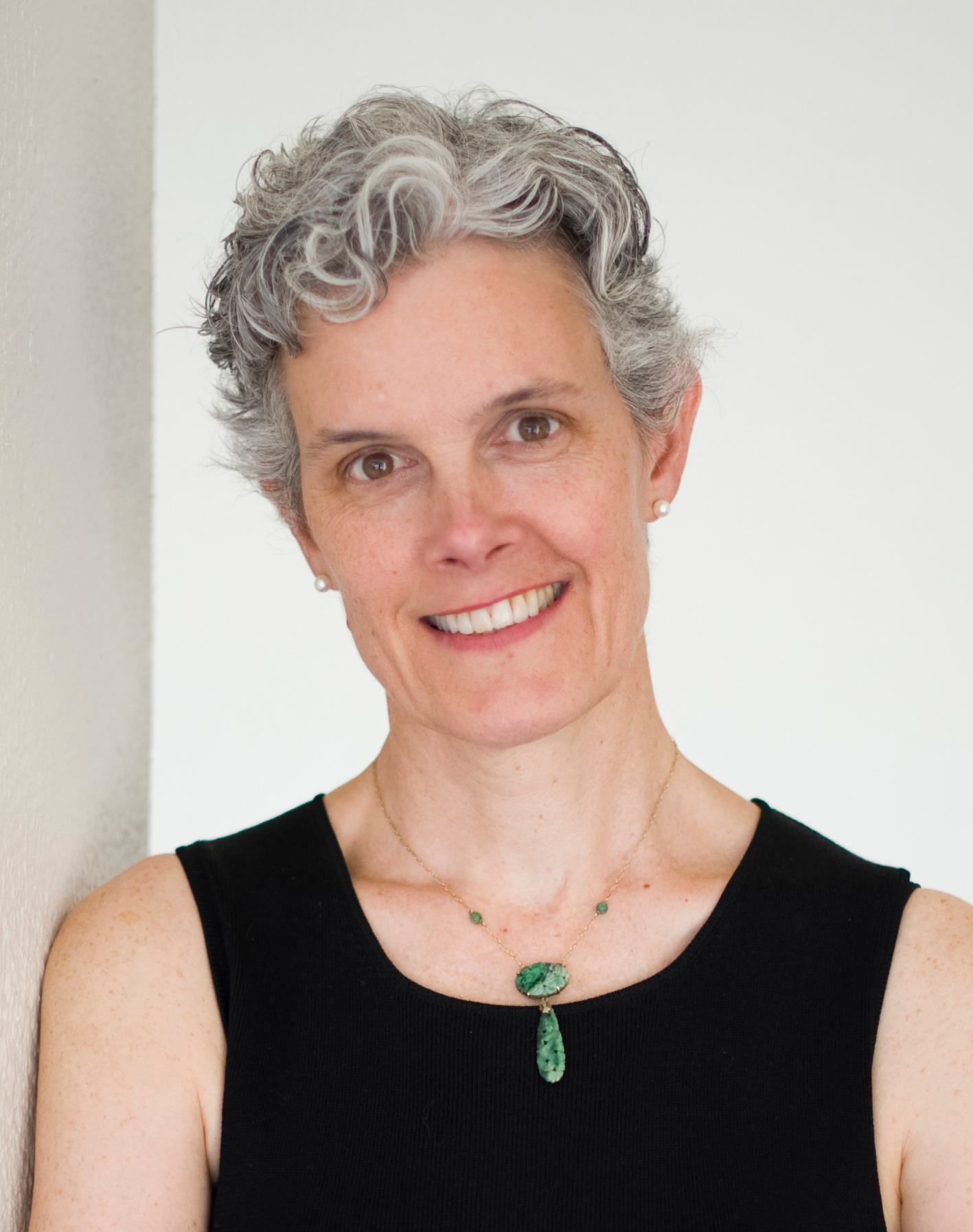
Maggie Jackson
Maggie Jackson is an award-winning author known for her prescient writings on social trends. Her latest book, Uncertain, was named a Top 25 Nonfiction Book of 2024 by the Next Big Idea Club led by Malcolm Gladwell, Susan Cain, Dan Pink and Adam Grant. Uncertain also was chosen as a best book of the year by Library Journal, Greater Good magazine, the Artificiality Institute, and the Independent Publishers of New England. A former Boston Globe columnist and past AP foreign correspondent in Asia and Europe, Jackson contributes to major publications including The New York Times. Her acclaimed book Distracted (2nd ed., 2018) sparked a global conversation on the costs of fragmenting our attention. Jackson has advised leading executives, scientists, educators, and change-makers worldwide and her work has been translated into multiple languages.